8.1 Directing Small Ensembles
Essential Question: How do you prepare for and lead an ensemble rehearsal when you are not a trained conductor?
A Familiar Scenario
You’re asked to conduct a sectional. Eek—you’re a clarinetist, not a conductor. How do you prepare?
Most instrumental musicians, at some point in their career, are handed an ensemble and expected to lead. It might be a sectional at a youth orchestra, a chamber group preparing for a performance, a summer festival, or a student ensemble you’ve been asked to coach. You won’t have years of conducting training. But you do have years of experience inside ensembles, watching conductors work—and that experience, combined with deliberate preparation, is enough to lead a rehearsal well.
This lesson walks through what to know before you arrive, how to prepare, how to carry yourself during the rehearsal, and how to stay attentive to the humans in front of you—not just the music on the page.
Things to Know Before You Arrive
Good rehearsals begin with good information. Before stepping in, find out as much as you can about the situation you’re walking into.
- Your role: Are you the director (setting the interpretation and making decisions) or a guide (helping the group refine what they already have)? Most sectionals are somewhere in between. Knowing which mode you’re in shapes how directive your language should be.
- The instrumentation: Who’s in the room, and how many of each? A full wind ensemble sectional is not the same as a mixed chamber group or a single-section rehearsal.
- Age and level: A middle school group, a college ensemble, and a semi-professional community band all need different approaches. How long have these players been playing together? A newly formed group needs more foundational work; a seasoned ensemble wants refinement.
- How long they’ve had the music: Is this a first read-through, or have they been living with the piece for weeks?
- Rehearsal plan and structure: How long is the rehearsal? Are there breaks? Do you need to budget time for announcements, warm-ups, and transitions?
- Learning style expectations: Does this group expect a talk-heavy rehearsal with lots of explanation, or a play-it-again-and-fix-it approach? What’s their program’s culture?
- The goal: When is the concert, and what are you preparing for? Is this polishing, or is the group still assembling the piece?
- The space and resources: What does the room look like? Do you have enough chairs, stands, and space? Any logistical surprises (no tuner, no recording device, noisy HVAC)?
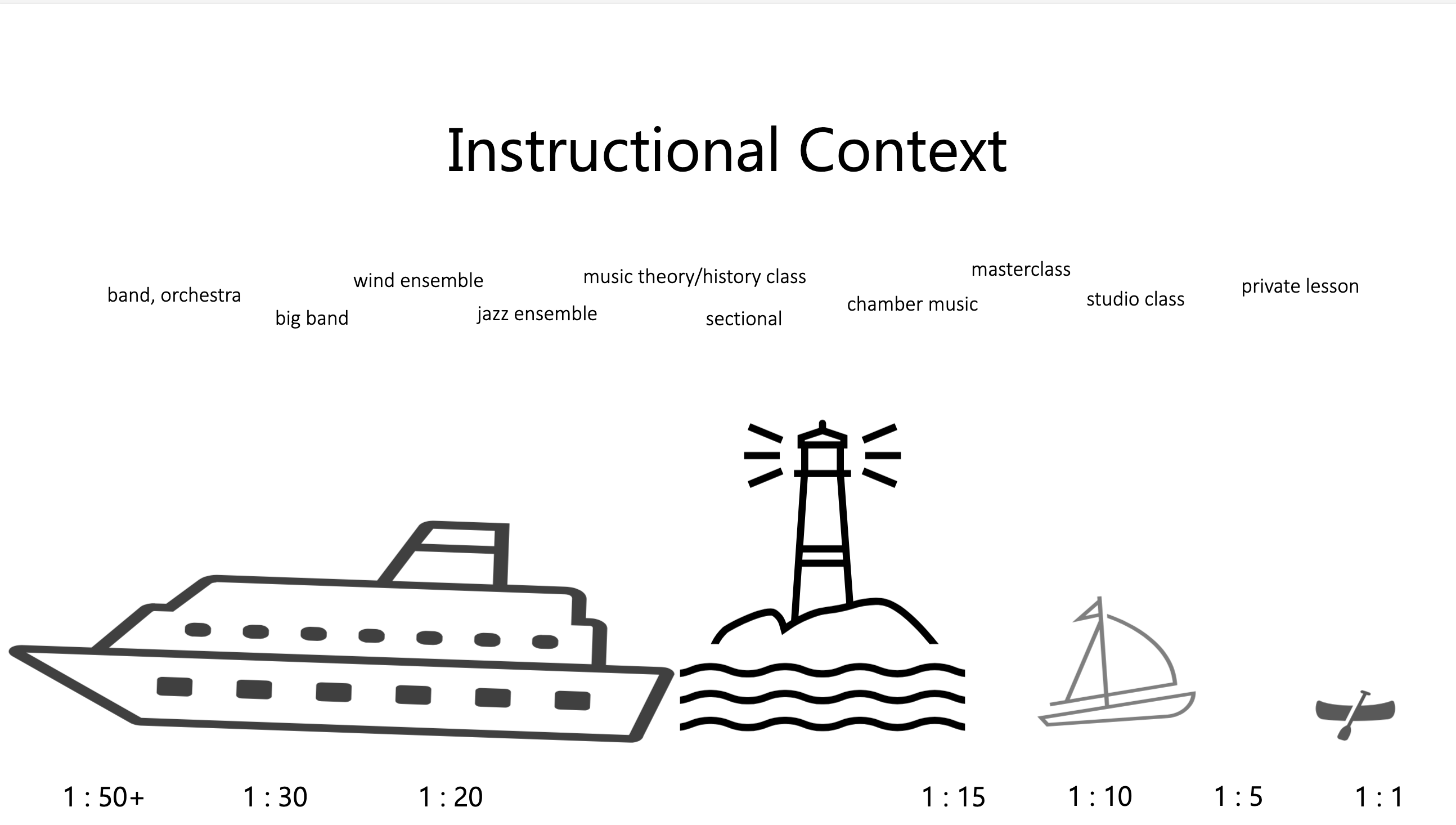
Preparing the Rehearsal
Once you know what you’re walking into, the real preparation begins.
- Programming and repertoire: If you’re selecting the music yourself, choose pieces appropriate for the group’s level and the time available.
- Obtaining the music: Order or print parts well in advance—nothing derails a first rehearsal like missing music.
- Score study and conducting practice: Learn the piece inside out. Sing parts, clap rhythms, and practice your conducting patterns in a mirror or on video.
- An organized but flexible plan: Build a rehearsal order and timing, but leave room to change course based on what the group actually needs.
- Practice selections ready to go: Pre-plan the specific passages you want to work on. This keeps the rehearsal focused and saves time flipping through the score.
- Know the music well enough to respond in real time: You can’t fix what you can’t hear. Deep score study gives you the bandwidth to react on the fly.
- Plan your opening: How will you introduce yourself? What’s the first thing you’ll say? The opening minutes set the tone for everything that follows.
- Clear expectations: Know what you want—in behavior, attention, and sound—and plan how you’ll communicate it.
When You’re Directing
Logistics and Pacing
Arrive early to set up the room and greet players as they arrive. Tune the ensemble carefully—it’s an investment in everything that follows.
Pace with awareness—especially of brass players’ faces. Brass embouchures tire quickly. Plan rest points, or rotate focus between sections so no one is playing continuously for too long.
Offer multiple explanations. Not every player learns the same way. If a metaphor doesn’t land, try a technical description, a sung demonstration, or a gesture. Different students need different inroads.
Balancing Needs
You’ll be navigating the tension between the ensemble as a whole and the individual players within it. A correction one player needs might bore the others; a concept the whole group needs might single out a struggling player. Balance the needs of the many and the needs of the few—sometimes in the same breath.
Professionalism and Collaboration
Present a professional and friendly demeanor. Warmth and authority are not opposites.
Be a good collaborator. Stay flexible and open to suggestions from the players. Good ideas come from everywhere.
Have a point of view—and be willing to defend it. Waffling undermines the ensemble’s trust. Know what you think and why.
Stay open to counterviews and willing to compromise. Conviction is not the same as rigidity. The best directors hold their interpretations firmly but loosely.
Notice the Humans in Front of You
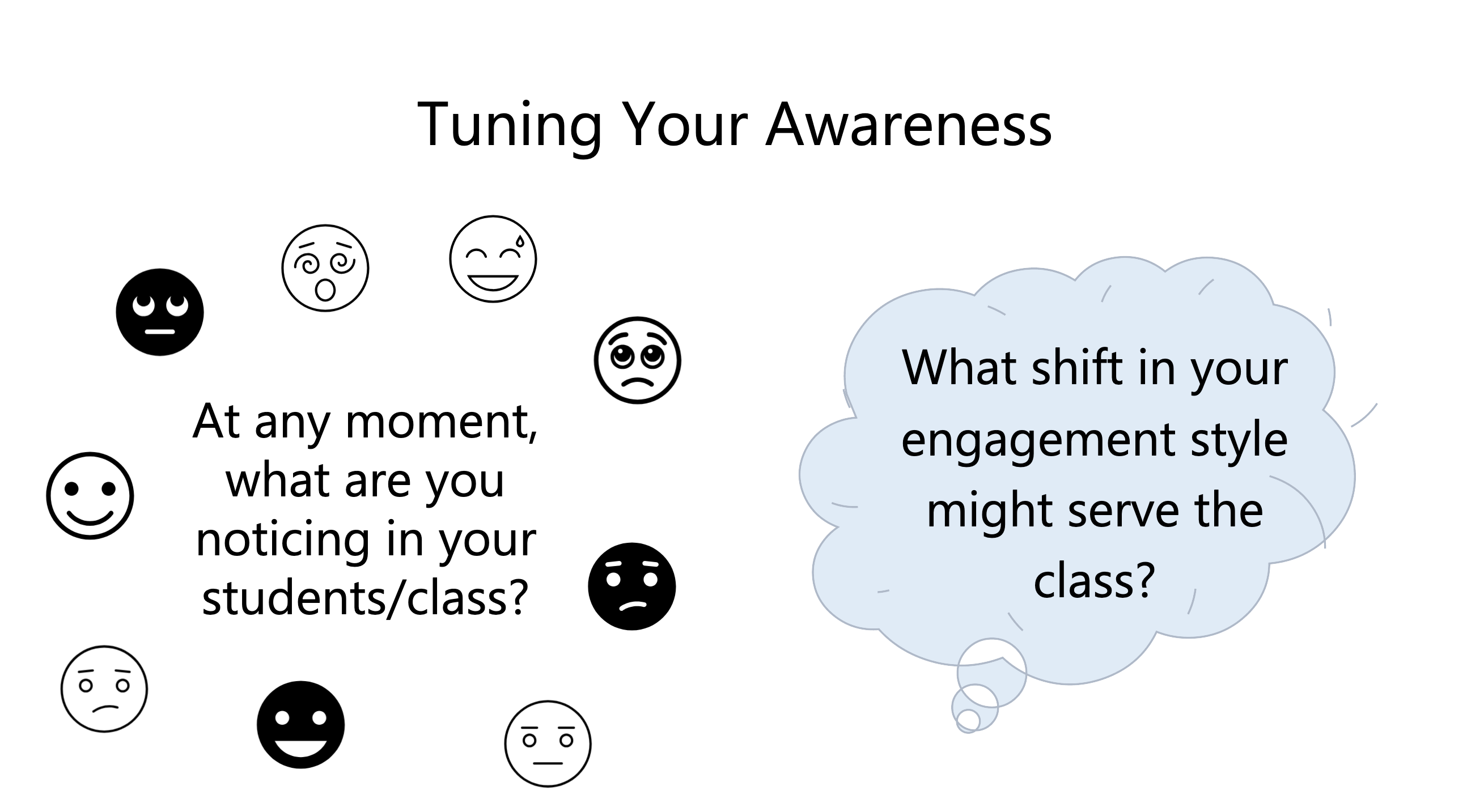
Don’t get so lost in directing the music that you forget there are humans playing it.
Every rehearsal is also a human encounter. The players in front of you are arriving from full days, with varying levels of energy, fatigue, confidence, and personal weight. Tuning in to that reality isn’t separate from the musical work—it’s part of it.
Open Your Awareness
- How are they presenting to you, right now?
- What is their expression, their demeanor?
- How are they sounding today?
- What are you noticing about individuals within the group?
- What is the feeling in the room?
Keep Your Perspective
- What’s the big picture?
- Where is my ensemble, right now—today, this week, in the arc of preparation?
- How can my feedback best support their learning and guide their sense of ensemble playing?
Remain an Observer
Keep your feedback neutral, factual, and non-judgmental. The best rehearsal feedback:
- Is specific.
- Notices what went well and what could be improved.
- Avoids aggression, attacks, or sarcasm.
- Stays focused on music, sound, and playing—not personalities.
Engaging the Ensemble
How do you engage a group of learners?
- Create a rehearsal plan: A structured rehearsal feels purposeful—players can tell something is happening.
- Set clear expectations around behavior: Arrive on time. Phones off or put away. Rest position when not playing.
- Beginnings matter: Warm up and tune the ensemble thoughtfully. The first ten minutes set the tone.
- State the musical goals: What are we working on today? What will success look like?
- Shift with intention: When moving between sections, pieces, or musical focus, transition deliberately—not by drifting.
- Endings matter: Students should leave knowing what to practice before the next rehearsal.
- Engage peer-to-peer learning: Assign practice partners, section leaders, or listening buddies. Learning from peers goes both ways.
Tuning an Ensemble
Bach Chorales
Playing Johann Sebastian Bach chorales is one of the most effective ways to develop intonation, balance, and ensemble awareness. Because the writing is harmonically rich and transparent, it forces players to listen carefully and make constant adjustments.
A horn section, for example, typically has four players, which is perfect for working through chorales together. More broadly, chorales are an excellent way to begin a sectional or repertoire class for any instrument group. If you are coaching a sectional, starting with a chorale helps immediately focus the group on listening, matching, and blending.
To get the most out of chorales:
- Listen down, not just across—tune to the lowest sounding voice
- Adjust pitch based on harmonic function (thirds lower, fifths higher)
- Match tone, articulation, and note length across the group
- Sustain through the ends of notes—don’t let the pitch drop or disappear
IMPORTANT: If you are using a mixed group of instruments, make sure everyone is playing in the same concert key. This may require players to transpose. (See Lesson 8.3 for more on navigating transpositions as a player, teacher, and coach.)
Example Session
Use this at the start of a sectional or rehearsal to immediately focus the group.
Step 1: Play it straight through
- Keep it slow and connected
- Focus on steady air and full sound
- Listen
Step 2: Tune from the bottom up
- Start with the lowest voice alone
- Add one part at a time
- Each player adjusts to what they hear, not what they think is “correct”
Step 3: Isolate problem chords
- Find spots that felt unstable
- Hold those chords and adjust: octaves and unisons perfect, fifths just barely higher, major thirds slightly lower, minor thirds slightly higher
- Listen for “ring” or resonance when it locks in
Step 4: Match within the section
Unify:
- Articulation (how notes start)
- Length (how notes end)
- Tone color
Step 5: Play it again
- Same tempo
- Notice what improved
- Aim for more resonance, not more effort
Basic Conducting
These introductory pages from Robert Starer’s Rhythmic Training show the standard conducting pattern for each common time signature, along with a brief explanation of which beats are strong and which are weak within each meter.
Most orchestral musicians can do basic conducting just from the hours they’ve spent watching a conductor from inside an ensemble. You can use a baton or just your hands—most non-conductors leading a sectional will simply use their hands.
Watch the video below for some tips, then try conducting in a mirror. Getting comfortable with your own gestures before you stand in front of the ensemble will save you from the self-consciousness that can tense up a new conductor.
For Next Class
We’ll be working on the basic skills you need to lead an ensemble:
- Tune unisons, octaves, and major chords.
- Conduct in 2, 3, and 4. Bonus if you can also manage 5, 6, and 7.
- Cue effectively. Set the tempo, use breath, give clear preparatory beats.
- Unify or contrast an articulation across sections.
- Shape a phrase within the ensemble.
Assignment
Be prepared to conduct and direct Tawnie Olson’s Pops! (2018) for wind ensemble, from rehearsal G through K. Score embedded below.