4.6 Bassoon
Essential Question: What is a bassoon?
The bassoon is a double-reed woodwind instrument known for its rich, dark tone and wide range. It is the bass voice of the woodwind family in the orchestra and concert band, producing sound when air is blown between two pieces of cane reed bound together, causing them to vibrate.
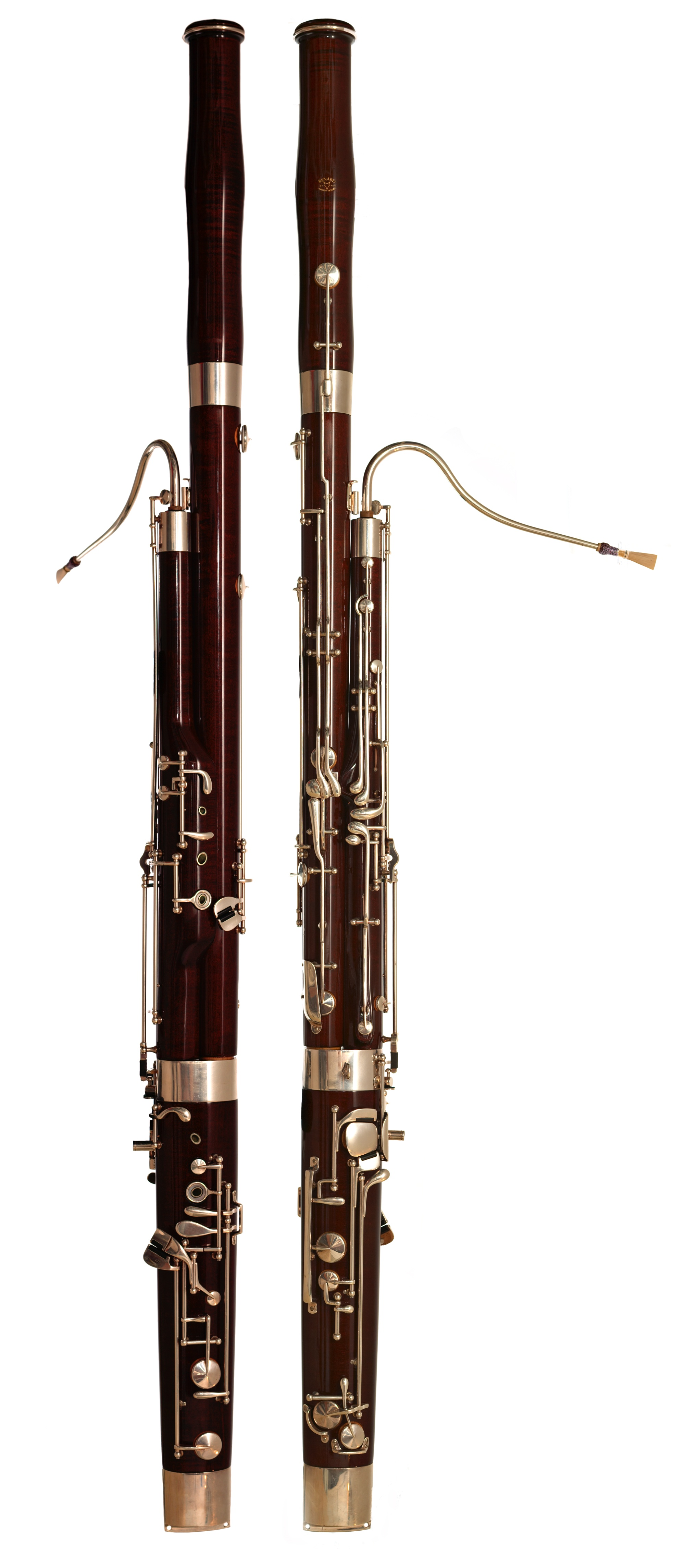
Physical Features
The bassoon is built from five main sections joined together.
Material
Modern bassoons are typically made of maple wood, which gives them a warm, resonant tone. Student models may use plastic or resin for durability and affordability. Keys and mechanism are nickel or silver-plated metal.
Bocal
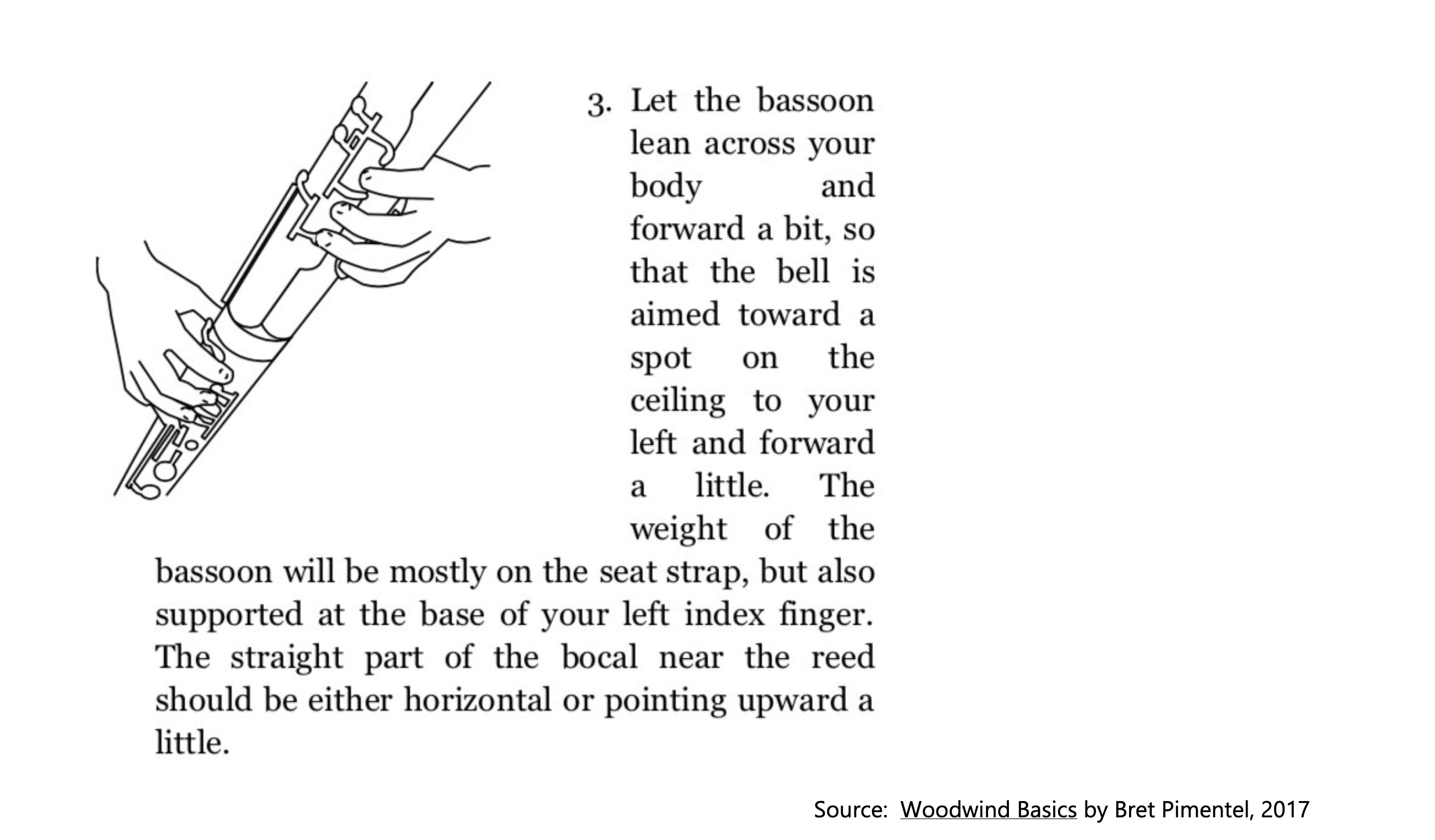
A curved metal tube that connects the reed to the instrument and directs air into the bore.
Wing Joint
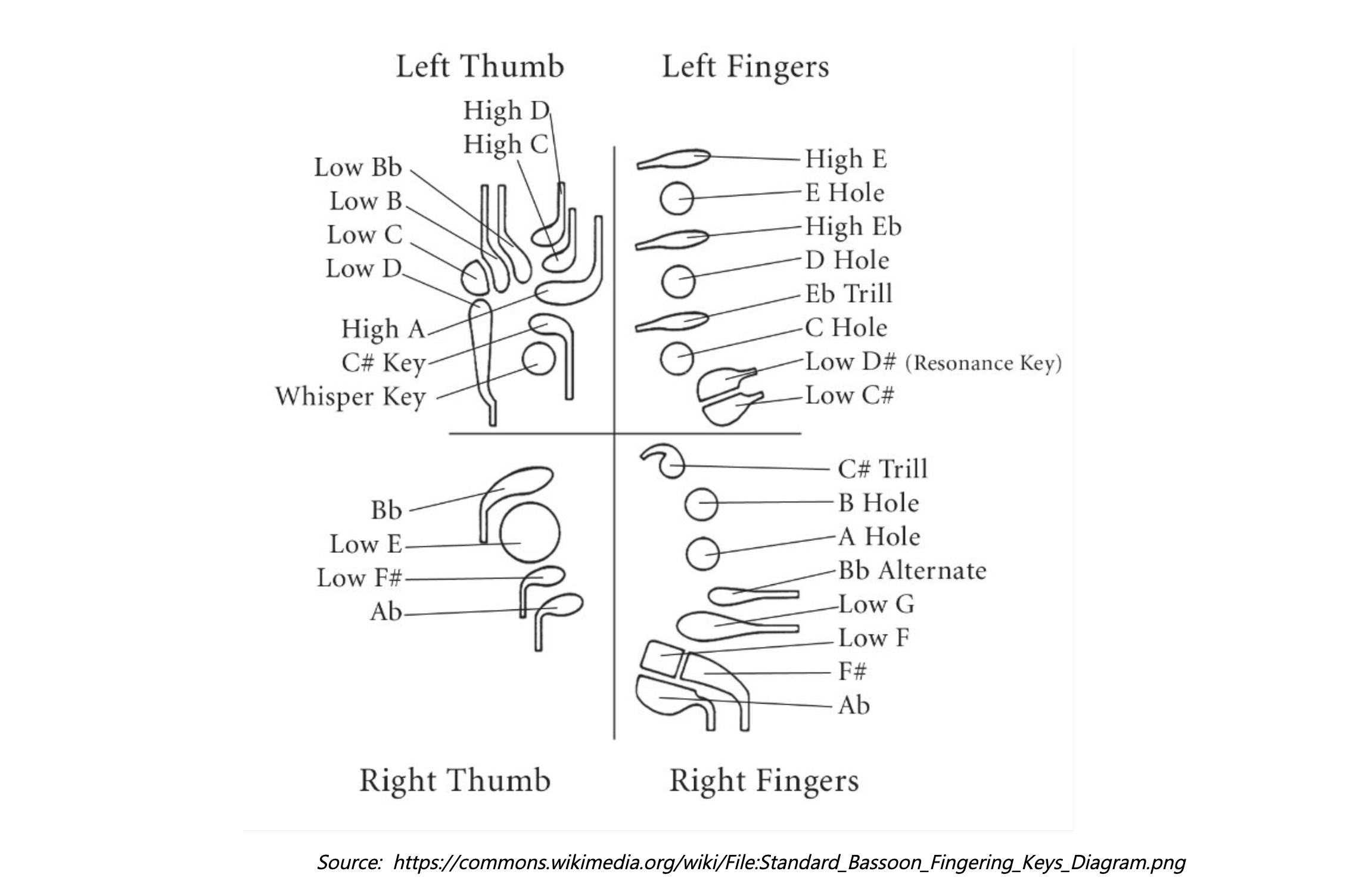
The upper section, where the player's left-hand fingers operate the primary tone holes.
Boot Joint
The bottom U-shaped section that connects the wing and long joints, allowing the air column to travel efficiently through the instrument.
Long Joint
The section where most of the right-hand keys are located, helping extend the instrument's range.
Bell
The top, slightly flared end that aids in projection and tonal resonance.
How the Bassoon Makes Sound
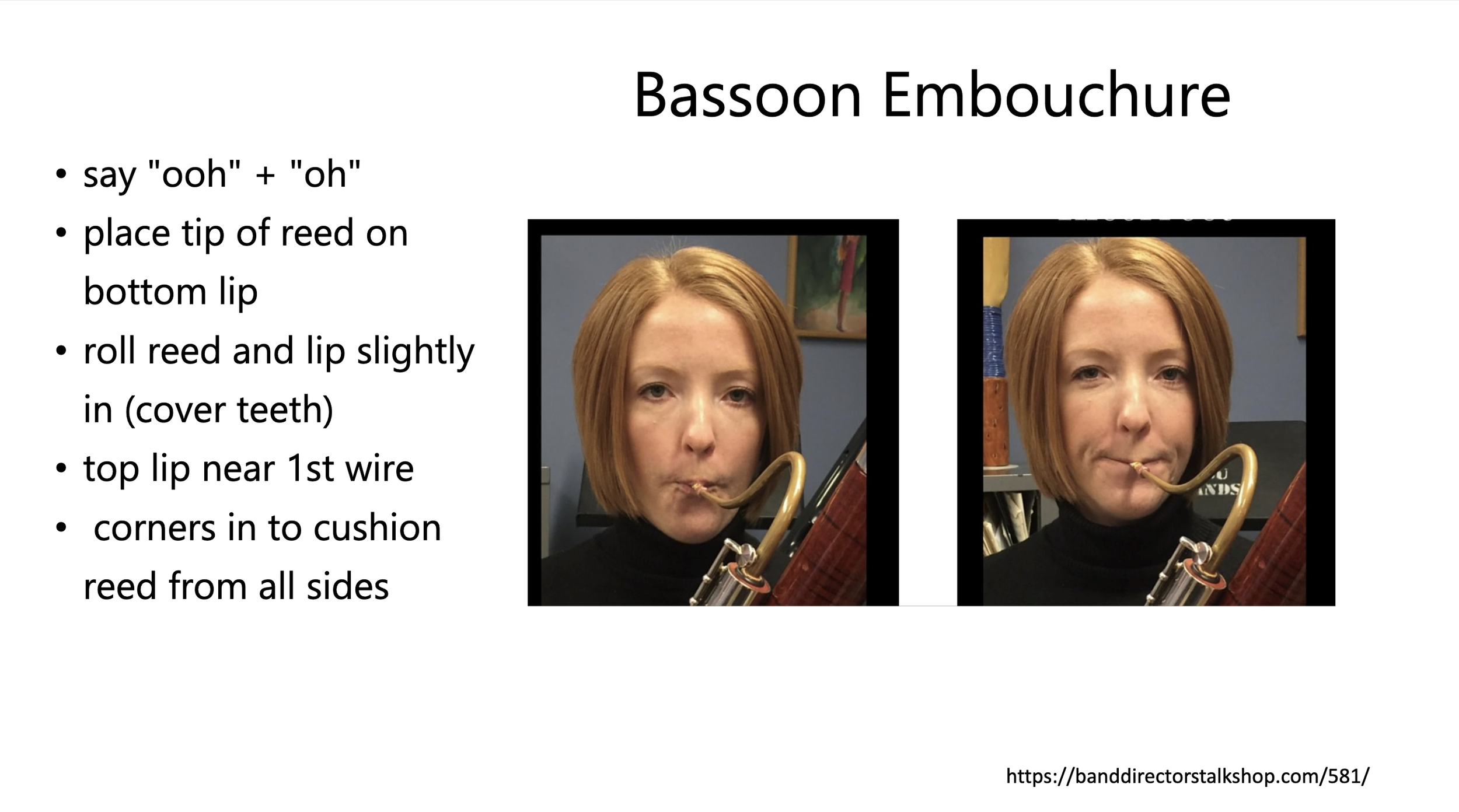
The bassoon is a double-reed instrument: sound is produced by two thin pieces of cane vibrating against each other. The player controls pitch and tone by adjusting fingerings, embouchure pressure, and air support.
Tone
The bassoon's sound is rich, warm, and reedy — distinctively dark, resonant, and full-bodied. It can produce lyrical, expressive melodies as well as playful, comedic effects, making it a key voice in orchestras and chamber music. Despite being one of the lowest-pitched woodwinds, it has surprising agility and expressive potential in its higher register.
Types of Bassoons
- Bassoon The standard instrument, used across orchestral, wind ensemble, and chamber settings.
- Contrabassoon A larger, lower-pitched version that sounds an octave below the standard bassoon. Used for deep bass lines in orchestral and ensemble settings.
The bassoon is a versatile instrument with a unique role in orchestras, wind ensembles, and chamber groups. Its expressive range and dynamic flexibility make it essential for both melodic and harmonic support across many musical genres.