4.5 Oboe and English Horn
Essential Questions: What is an Oboe? What is an English Horn?
The oboe is a soprano-range double-reed woodwind instrument in C, known for its bright, penetrating tone and expressive melodic capabilities in orchestral and chamber settings. The English horn, pitched a fifth lower in F, has a warmer, more mellow timbre and is often used for lyrical solos and rich harmonic textures.
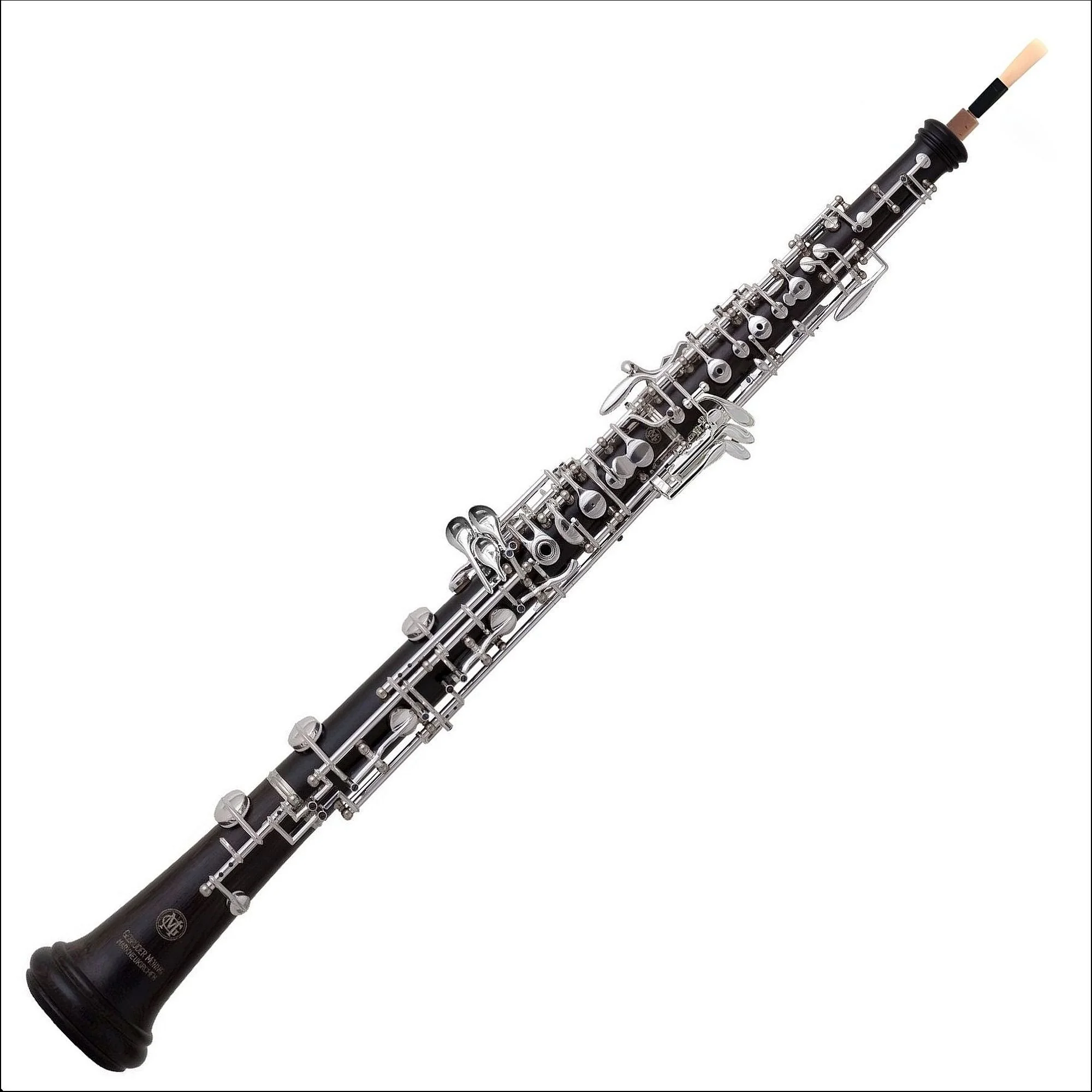
Oboe
The oboe is a standard member of orchestras, wind ensembles, and chamber groups. It often carries lyrical melodies and is known for its expressive solos. Its tone is variously described as bright, nasal, or singing — instantly recognizable in any ensemble.
Pedagogical Considerations
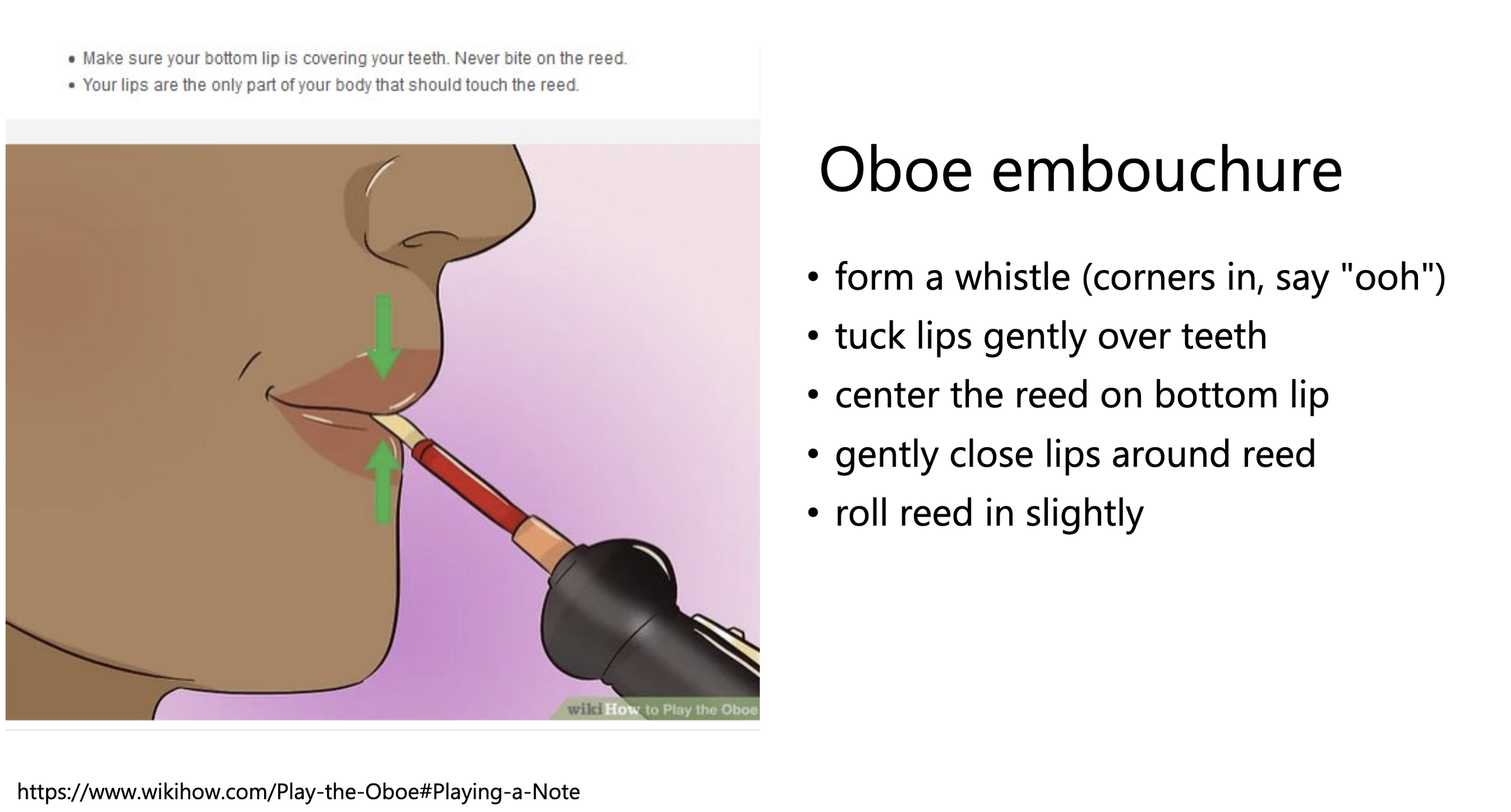
Embouchure & Air Support
The oboe requires a firm but flexible embouchure with high air resistance. Students must develop strong diaphragmatic support to control dynamics and intonation.
Reed Management
Unlike single-reed instruments, oboists make or adjust their own reeds, which requires specialized skills in reed scraping and balancing.
Intonation
The oboe is prone to pitch instability, especially in the upper register, and requires careful embouchure and air adjustments.
Finger Technique
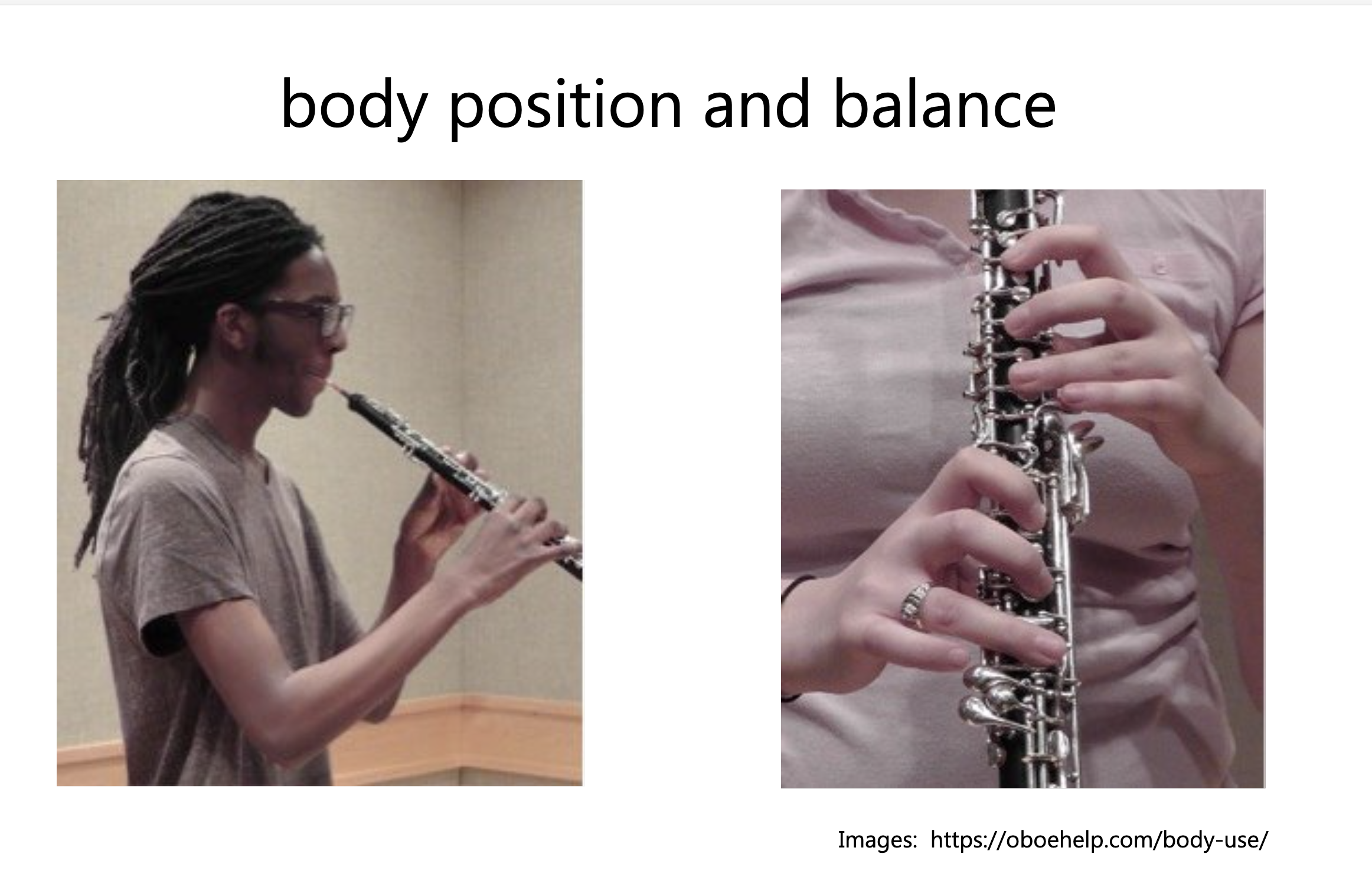
The oboe's conservatory key system can be intricate. Half-holes and octave-key coordination are common early challenges.
English Horn (Cor Anglais)
Often used in orchestras and wind ensembles for lyrical, expressive solos — especially in Romantic and Impressionist repertoire, like Dvořák's New World Symphony.
Pedagogical Considerations
Reed & Air Support
Similar to the oboe but requires slower airspeed because of the larger bore and reed. Students must adjust embouchure and air pressure accordingly.
Transposition
Sounds a fifth lower than written. Students need to be comfortable transposing mentally when switching between oboe and English horn.
Hand Position & Weight
The instrument is larger and heavier than the oboe, requiring an angled bocal and often a neck strap or peg for support.
Sequencing in Pedagogy
Most students learn oboe first and transition to English horn later. Teachers should introduce repertoire and orchestral excerpts that highlight the instrument's unique color.