4.4 Saxophones
Essential Question: What is a saxophone?
The saxophone is a family of single-reed woodwind instruments with a conical brass body. Each member has its own range, timbre, and typical role, but all share the same fingering system and a written range that spans roughly two and a half octaves.
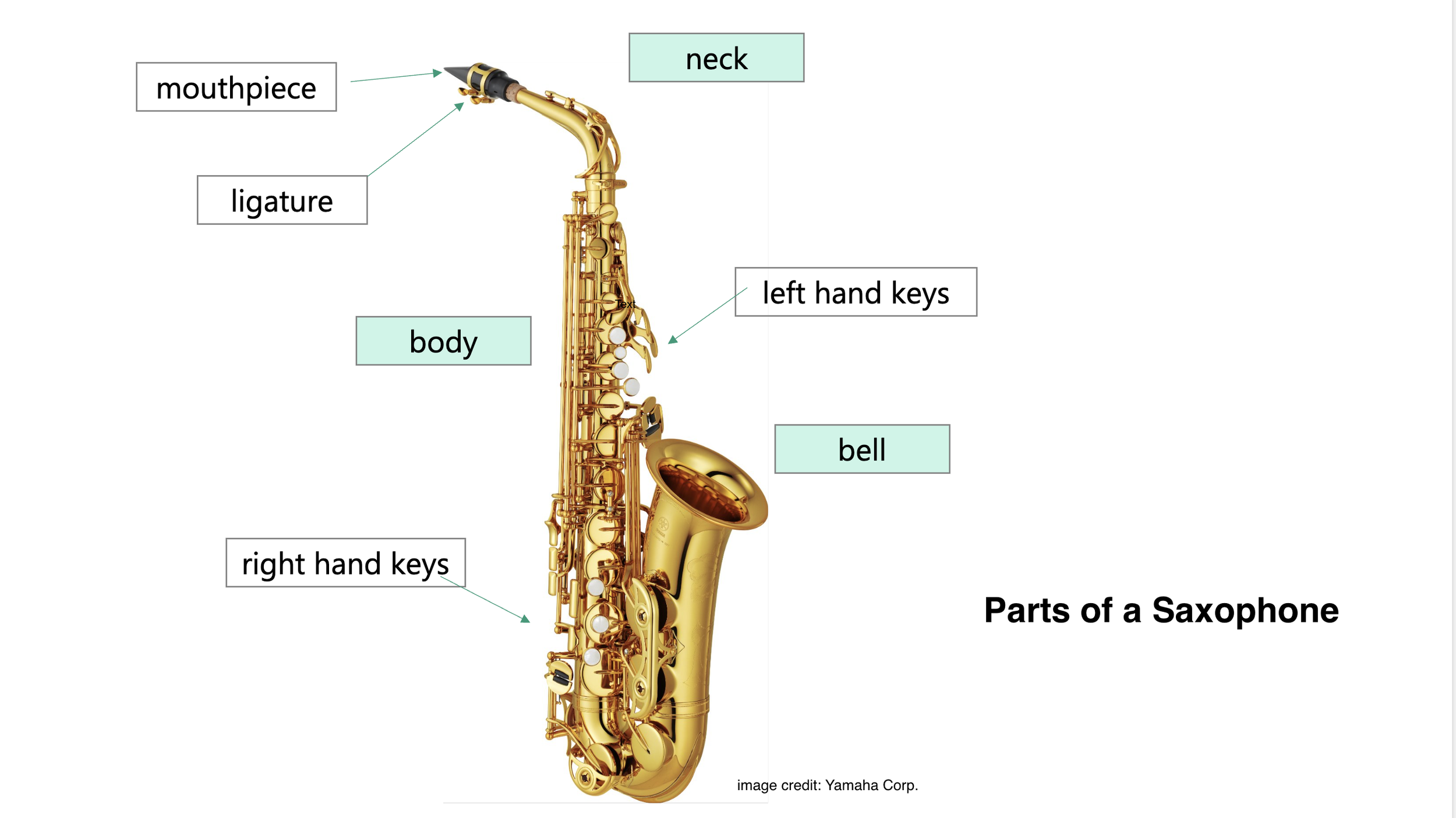
How the Saxophone Makes Sound
Sound is produced by a single reed clamped to the mouthpiece. The player's air sets the reed vibrating, and those vibrations resonate through the conical brass body. The player changes pitch by opening or closing tone holes with the keys. Saxophones are transposing instruments, so each member sounds at a different concert pitch than written.
Types of Saxophones
- Soprano Saxophone The smallest of the commonly used saxophones, pitched in B♭. Bright, piercing tone, used in classical, jazz, and contemporary music. Can be straight or curved in shape.
- Alto Saxophone Pitched in E♭. Slightly larger than the soprano, with a warm, expressive tone. Widely used in jazz, classical, and pop music, and a popular choice for beginners thanks to its manageable size.
- Tenor Saxophone Pitched in B♭. Rich and warm with a slightly huskier quality than the alto. A staple of jazz, rock, and pop music, associated with iconic players like John Coltrane and Sonny Rollins.
- Baritone Saxophone Pitched in E♭. Much larger and deeper, with a powerful sound. Common in jazz ensembles, concert bands, and saxophone quartets. Some baritones have a low A key that extends the range.
- Bass Saxophone Pitched in B♭, an octave below the tenor. A very deep, resonant sound used in some jazz and avant-garde settings, and in saxophone choirs.
- Contrabass & Subcontrabass Extremely large and rare. Pitched even lower — in E♭ and B♭ respectively — and used mostly in experimental or large-ensemble settings.
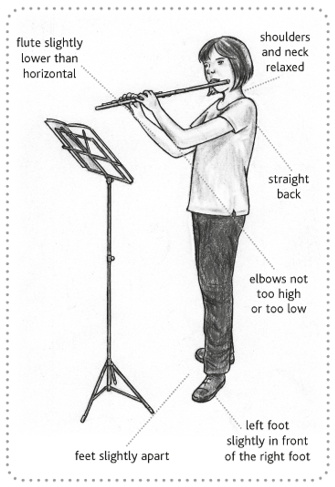
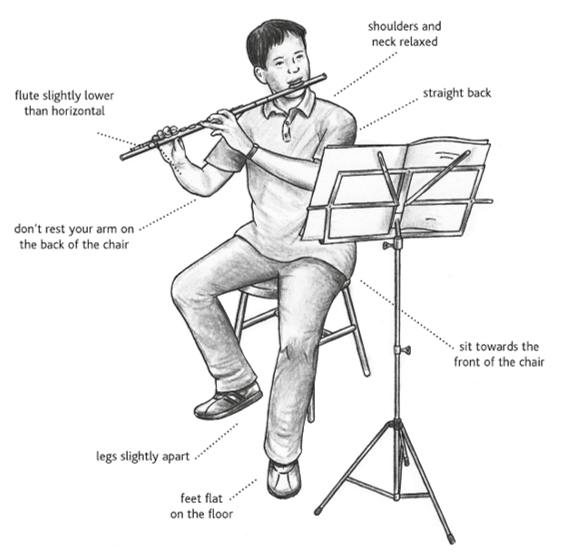
Source: https://freedomtoteach.collins.co.uk/how-to-teach-flute-technique-3-posture/