4.3 Clarinets
Essential Question: What is a clarinet?
The clarinet is a woodwind instrument that produces sound through the vibration of a single reed attached to the mouthpiece. It is known for its versatility, wide range, and warm, rich tone, making it a staple in orchestras, bands, jazz ensembles, and solo performances.
Physical Features
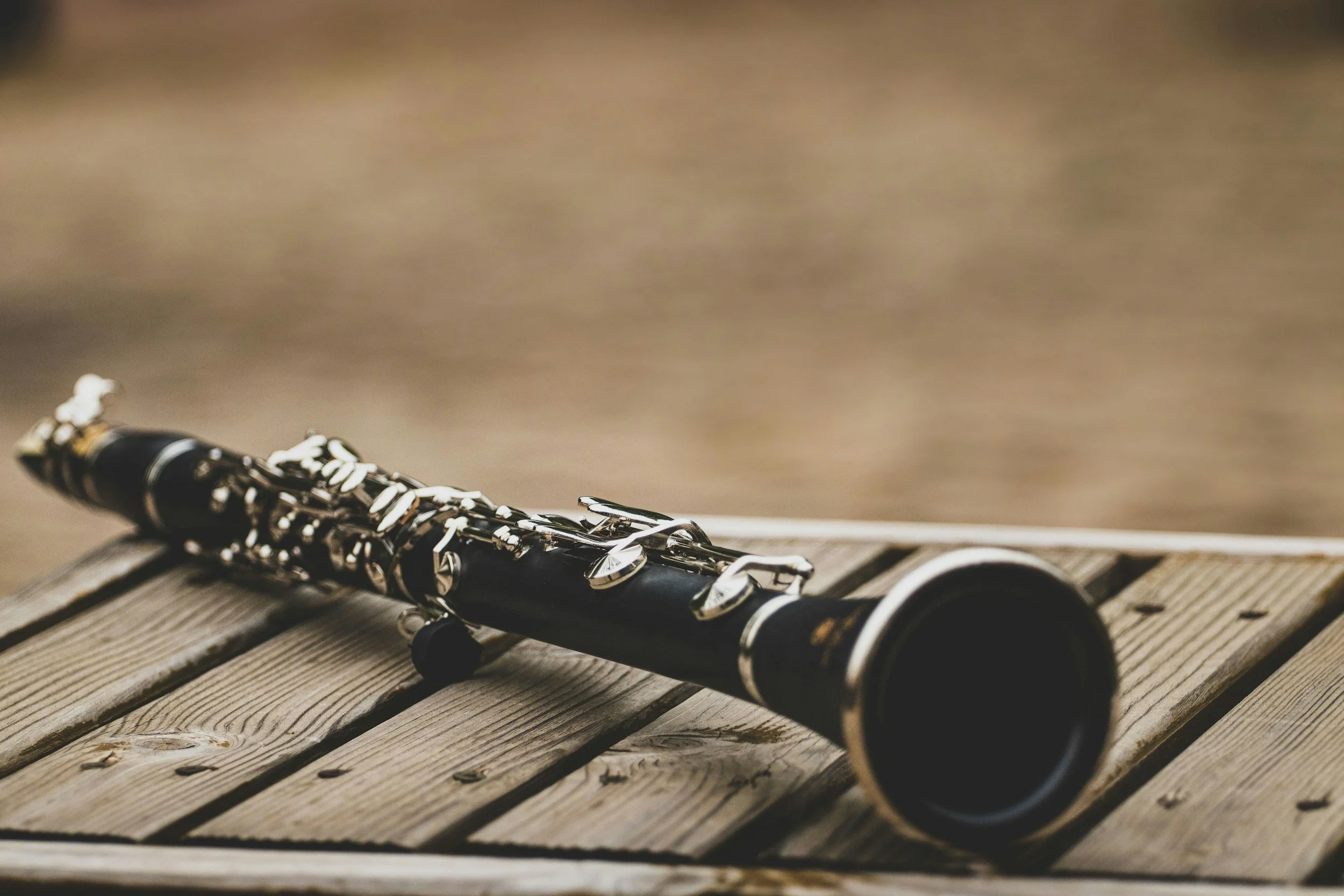
The clarinet's body is built from four main sections joined together.
Material
Traditionally made of wood such as grenadilla or rosewood. Beginner models are often plastic for durability and affordability, and keys are typically silver- or nickel-plated.
Mouthpiece
The top section where the single reed is attached. The player blows air across the reed to set it vibrating.
Barrel
Connects the mouthpiece to the main body and acts as a tuning adjustment for the instrument as a whole.
Body
The long main section, with tone holes and a system of keys the player operates to produce different pitches.
Bell
The flared end that projects the sound out into the room.
How the Clarinet Makes Sound
Sound begins when the player blows air between the reed and the mouthpiece, causing the reed to vibrate. Those vibrations travel through the air column inside the body, and the player changes pitch by opening or closing tone holes with the keys.
Tone and Register
The clarinet has one of the largest ranges of any woodwind instrument, spanning more than three octaves across three distinctive registers: the warm, rich chalumeau (low), the bright clarion (middle), and the high, brilliant altissimo. Its tone is famously dynamic — capable of soft, delicate passages and powerful, dramatic ones.
Types of Clarinets
- B♭ Clarinet The most common type, used in orchestras, bands, and jazz.
- A Clarinet Used primarily in orchestral music; slightly lower in pitch than the B♭ clarinet.
- Bass Clarinet Larger and lower-pitched, with a deep, mellow sound.
- E♭ Clarinet Smaller and higher-pitched, often used in band music and as a solo voice.
The clarinet is a versatile and expressive instrument, equally at home blending into an ensemble or standing out as a solo voice. Its diverse tonal palette and dynamic range make it essential to both classical and modern musical traditions.