4.2 Flute
Essential Question: What is a flute?
The flute is a woodwind instrument that produces sound by blowing air across the edge of a hole, creating vibrations in the air column inside the instrument. Unlike most woodwind instruments, the flute does not use a reed — it is classified as an edge-blown aerophone.
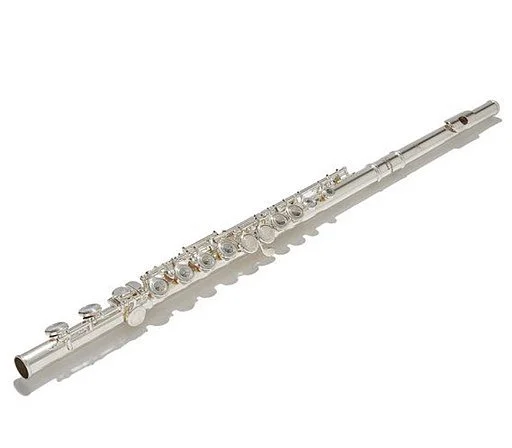
Physical Features
The flute is built in three main sections that fit together.
Material
Modern flutes are typically made of metal — silver, nickel, or gold — though earlier versions were made of wood or bone. Student flutes are usually nickel- or silver-plated brass.
Head Joint
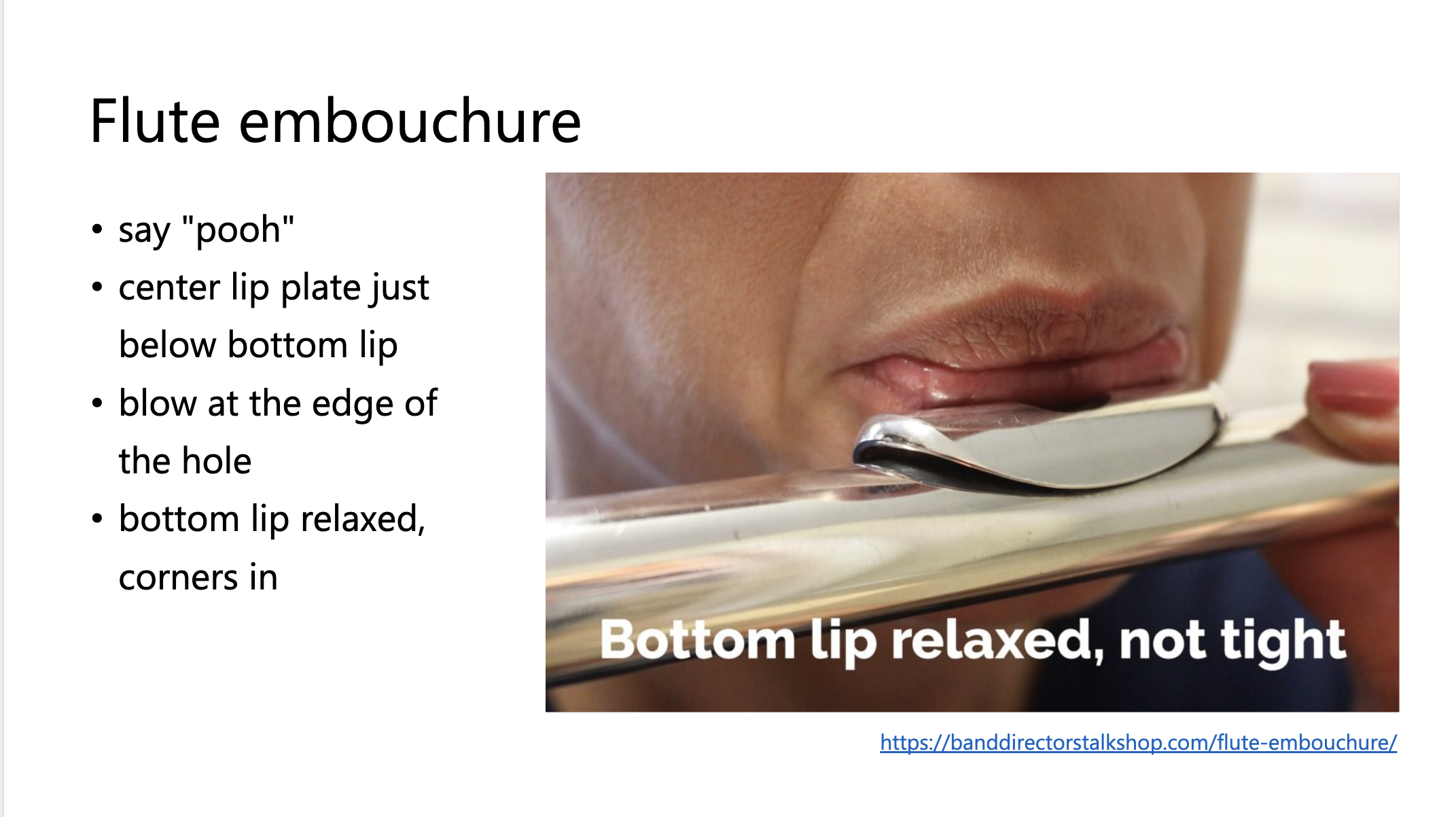
The top section, containing the embouchure hole. The player blows air across this hole to set the air column vibrating.
Body
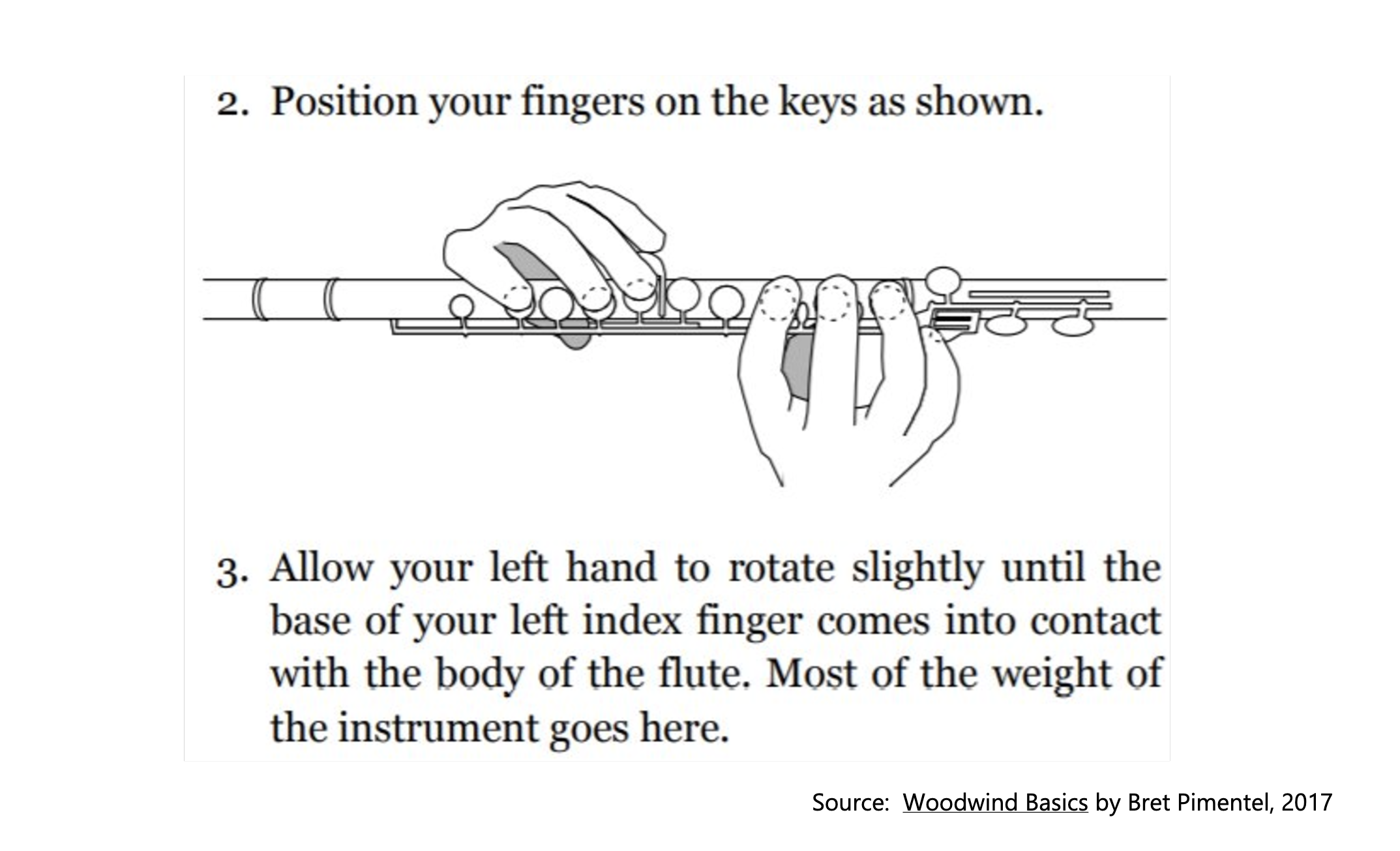
The main section, with tone holes covered by a system of keys that the player operates to change pitch.
Foot Joint
The bottom section, which extends the instrument's range down to its lowest notes.
How the Flute Makes Sound
The player blows a focused stream of air across the embouchure hole, splitting the air and setting the column of air inside the flute vibrating. The player changes pitch by opening or closing tone holes with the keys and by adjusting air speed and embouchure shape.
Tone
The flute is known for its clear, bright, and lyrical sound. Its tone can range from soft and delicate to vibrant and commanding, making it remarkably versatile across musical contexts.
Types of Flutes
- Piccolo A smaller, higher-pitched relative of the flute.
- Alto Flute Larger and lower-pitched, with a mellow sound.
- Bass Flute Even larger, producing deep and resonant tones.
The flute is a staple in orchestras, bands, chamber ensembles, and solo repertoire, admired for its expressive capabilities and wide dynamic range. Its history stretches back thousands of years, and its modern design lets it shine in both classical and contemporary music.
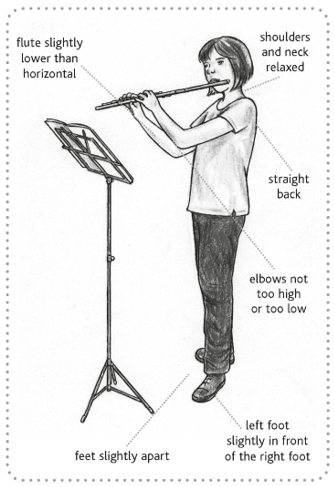
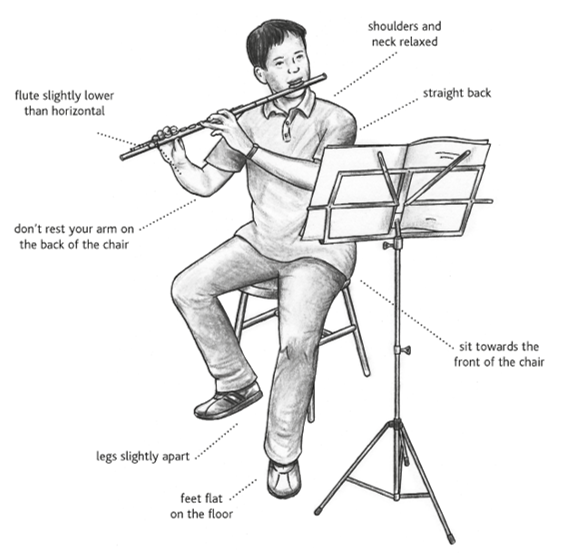
Source: https://freedomtoteach.collins.co.uk/how-to-teach-flute-technique-3-posture/