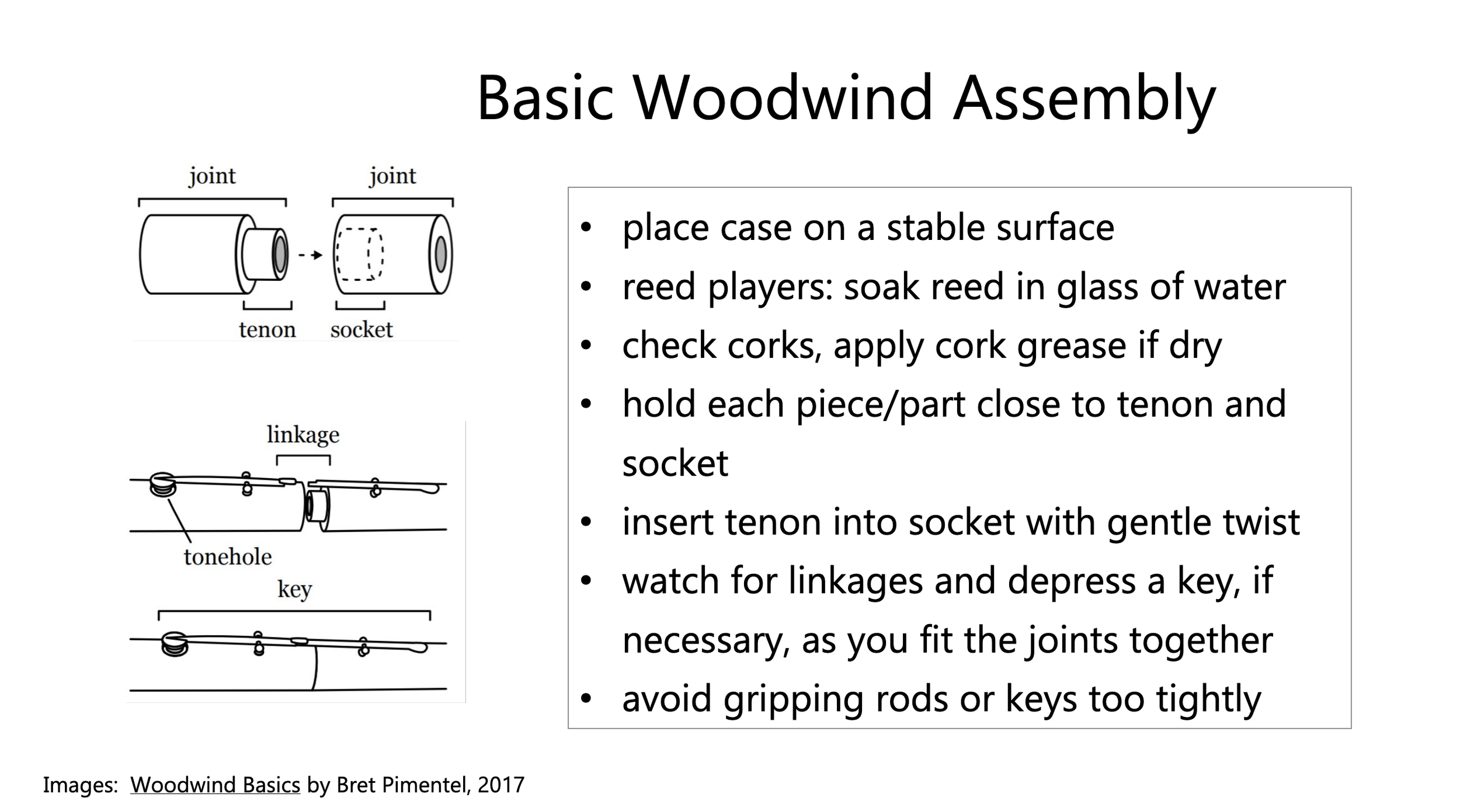
4.1 Woodwind Instrument Family
Essential Question: What instruments are part of the woodwind family?
The wind instruments can be divided into three sub categories based on how the sound is produced:
- Brass—As you learned last week, brass players produce a tone by creating a vibration with their two lips.
- Edge-blown—The tone of an edge-blown instrument, like the flute, is created when the player blows air across the edge of the mouthpiece, causing vibrations that produce sound. The player's lips control the direction and speed of the air, shaping the tone.
- Reed Aerophones—The tone of reed instruments is created when the player blows air through a single or double reed, causing it to vibrate and produce sound.
Woodwind instruments differ from brass instruments in the way they produce different notes as well. While brass players use valves to divert the air into different lengths of tubing, the woodwind instruments have tone holes or keys that open or close to change the length of the instrument.
The woodwind family is a primary section in orchestras and bands. These instruments produce sound when the player blows air through or across a mouthpiece or reed, and the air column inside the instrument vibrates. Woodwind instruments are typically made of wood or metal, and they can produce a wide range of tones, from warm and mellow to bright and piercing. The most common woodwind instruments used in orchestral and concert band settings are flute, piccolo, clarinets, oboe, English horn, bassoon, and saxophones.
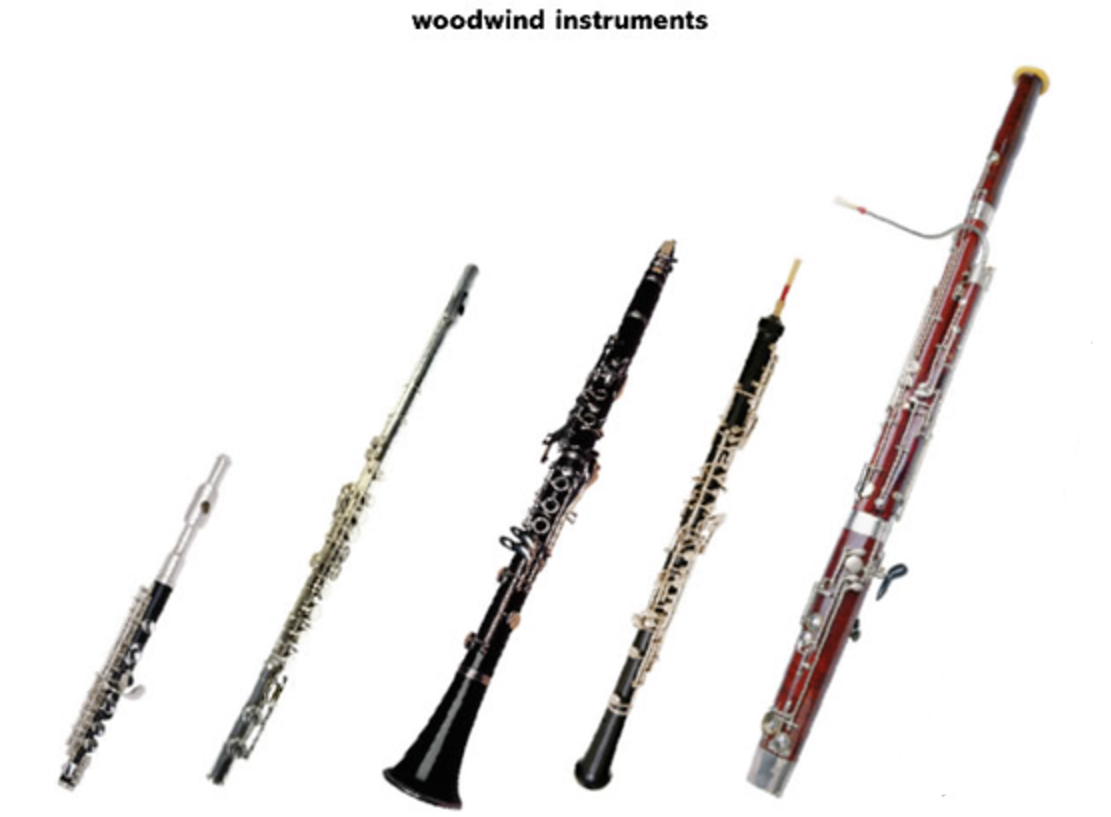
Common Characteristics of the Woodwind Family
- Made of metal or wood
- Sound produced by blowing across the edge or through a reed.
- Opening and closing keys and tone holes allow players to produce different notes.
Quick History Lesson
Woodwind instruments are among the oldest known musical instruments in human history, with origins tracing back to prehistoric times. Bone-carved flutes have been discovered that are over 43,000 years old, and cave paintings often depict flute-like instruments in their imagery. Flutes of various shapes appear across cultures and eras. Vertical flutes were commonly used throughout the ancient world by shepherds, while panpipes were particularly prevalent in South American indigenous cultures.
Early clarinets and oboes made from cane are depicted in imagery from Ancient Egypt, Greece, and various Muslim civilizations. These early reed-pipe instruments often featured two tubes—one producing a drone and the other playing a melody (see image below). Another historically significant reed instrument is the bagpipe. Most famously associated with the Scottish Highlands, bagpipes (see image above) consist of a reed pipe attached to a bag, traditionally made from animal hide, which is connected to additional pipes.
This diverse history highlights the importance of woodwind instruments in human culture across time and geography.
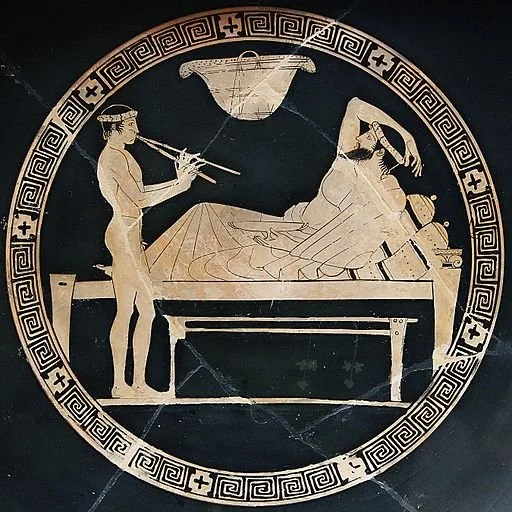
Image from Ancient Greek pottery
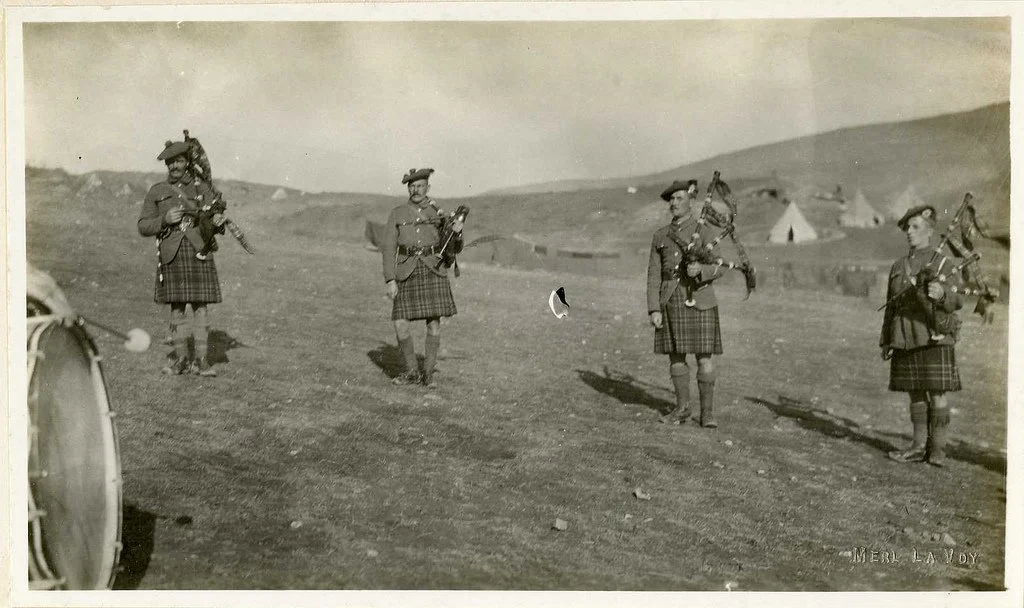
Scottish pipers at the Salonica front in WW1