3.5 Trombone
Essential Question: What is a trombone?
The trombone is a brass instrument known for its unique sliding mechanism and powerful, versatile sound. It is an integral part of orchestras, brass bands, jazz ensembles, and many other musical settings. Smooth glissandos, a wide dynamic range, and a broad tonal palette make it a favorite in both classical and jazz music.
Physical Features
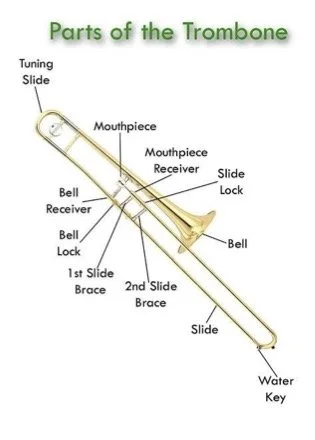
The slide is the trombone's defining feature; here are the components that work alongside it.
Mouthpiece
A detachable, cup-shaped mouthpiece where the player buzzes their lips to produce sound. Available in various sizes to suit different playing styles.
Slide
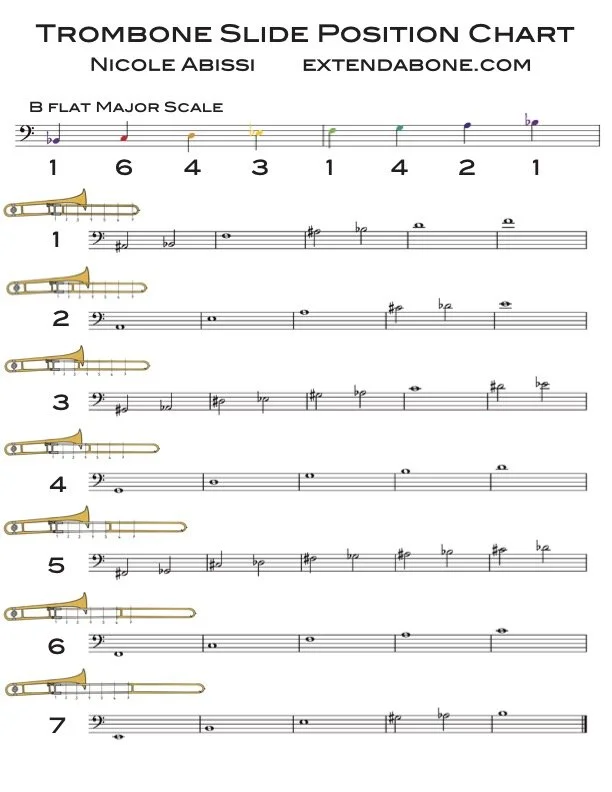
The trombone's signature feature: two parallel tubes that the player moves to change the length of the tubing and alter pitch. The slide has seven positions, each corresponding to a set of pitches.
Bell
The flared end of the instrument that projects sound. Bell size and material affect the tone's warmth and resonance.
Tuning Slide
Located on the back of the trombone. Adjusting it fine-tunes the instrument's overall pitch.
F-Attachment
Some trombones — including the tenor-bass and bass trombone — include an F-attachment or additional valves to extend the lower range and ease low playing.
How the Trombone Makes Sound
Sound begins when the player buzzes their lips into the mouthpiece, sending vibrations through the tubing. The player extends or retracts the slide to change the length of the air column and alter the pitch, while embouchure and air control refine tone and dynamics.
Types of Trombones
- Tenor Trombone The standard trombone, versatile and widely used across ensembles. May include an F-attachment for additional lower notes.
- Bass Trombone Larger than the tenor, with a deeper, richer tone. Usually has one or two valves to extend the low range. Common in orchestras and large ensembles.
- Alto Trombone Smaller and pitched higher than the tenor. Used primarily in classical and solo repertoire.
- Valve Trombone Uses valves in place of a slide, more like other brass instruments. Found in specific jazz and traditional band settings.
- Soprano Trombone Pitched higher than the alto, similar in range to the trumpet. Rare outside specialized settings.
Historical Context
The trombone's origins trace back to the Renaissance, when it was known as the "sackbut." Initially used in sacred and ceremonial music, it evolved into a more versatile instrument through the Baroque and Classical periods. The modern trombone — with its standardized slide and tuning mechanism — emerged in the 19th century.
Trombone Mouthpiece Position
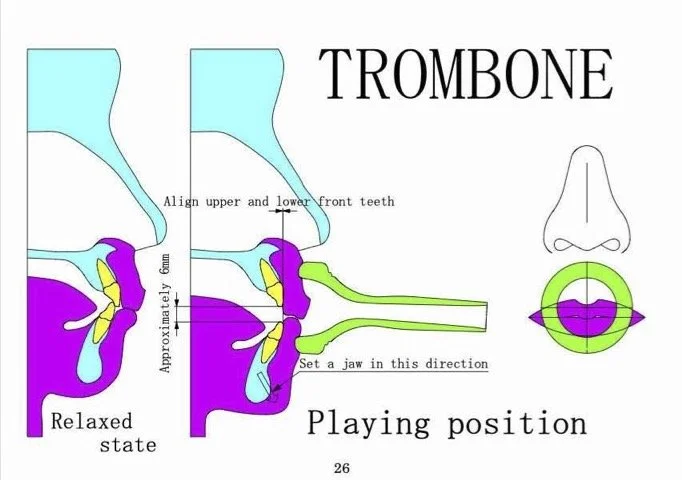
- Place the mouthpiece roughly half on the top lip and half on the bottom lip. The larger mouthpiece allows some flexibility in this ratio.
- Push the jaw slightly forward so the teeth line up on top of each other.
- Open the teeth lightly.
- Form a "brass face" to set the jaw and create the embouchure, with a small opening in the center of the lips (the aperture).
- Blow air through the aperture to start the buzz.