3.4 Horn
Essential Question: What is a horn?
The French horn, often simply called the "horn," is a brass instrument recognized for its rich, warm tone and wide range. Its distinctive sound lets it blend with both the brass and woodwind sections of an ensemble.
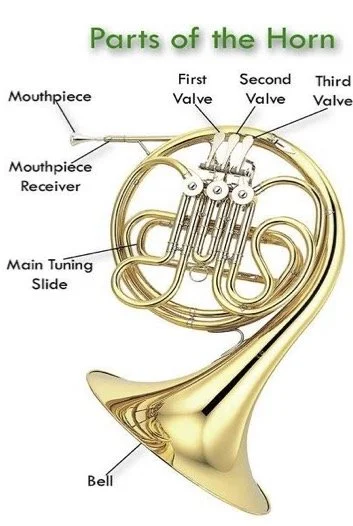
Physical Features
Seven components shape the horn's distinctive sound and feel.
Mouthpiece
A small, funnel-shaped mouthpiece where the player buzzes their lips to create sound. Mouthpiece size affects tone and playability.
Leadpipe
The tube connecting the mouthpiece to the main tubing. Its slightly conical shape contributes to the horn's warm, dark sound.
Valves
Typically four rotary valves (three on a single horn). Pressing them routes air through different lengths of tubing to change the pitch.
Tubing
Coiled into the horn's circular shape: about 12–13 feet uncoiled on a single horn, up to roughly 17 feet on a double horn.
Bell
The large, flared opening that projects the sound. Players rest the right hand inside the bell to shape tone, fine-tune intonation, and produce stopped or muted effects.
Slides
Tuning slides on the main loop and each valve let players adjust the pitch of individual notes or the overall instrument.
Thumb Trigger
On a double horn, the left thumb operates a trigger that switches between the F side and the B♭ side, opening up different ranges and timbres.
How the Horn Makes Sound
Sound begins when the player buzzes their lips into the mouthpiece, sending vibrations through the long coiled tubing. The combination of embouchure, valve choices, and the right hand's position inside the bell shapes both the pitch and the tone.
Types of Horns
- Single Horn In F or B♭. Lighter and simpler, with a more limited range. Often the starting point for beginners.
- Double Horn The standard professional model. Combines F and B♭ tubing for greater range and flexibility, with a thumb trigger to switch between the two sides.
- Triple Horn Adds a high F or E♭ side to the F and B♭ tubing, giving extra flexibility in the upper register.
- Natural Horn Has no valves. Players change pitch through hand-stopping and lip control. Used in historical and period performance.
Historical Context
The horn's origins trace back to hunting horns used across medieval Europe. By the 17th century it had entered the orchestra, and the addition of valves in the early 19th century opened up its full chromatic range.
Horn Mouthpiece Position
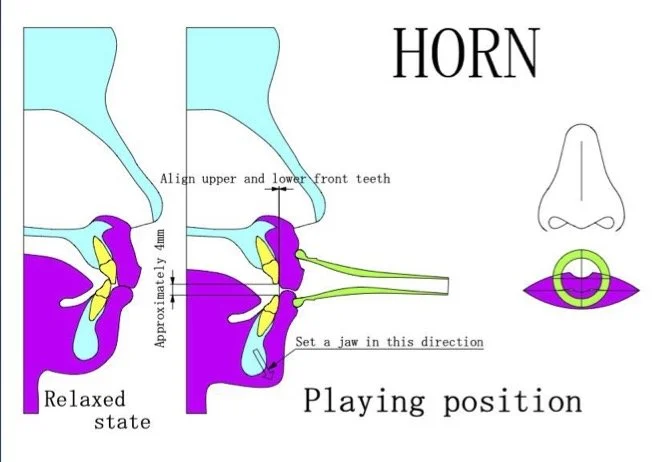
- Place the mouthpiece about two-thirds on the top lip and one-third on the bottom lip.
- Push the jaw slightly forward so the teeth line up on top of each other.
- Open the teeth lightly.
- Form a "brass face" to create the embouchure, with a small opening in the center of the lips (the aperture).
- Blow air through the aperture to start the buzz.
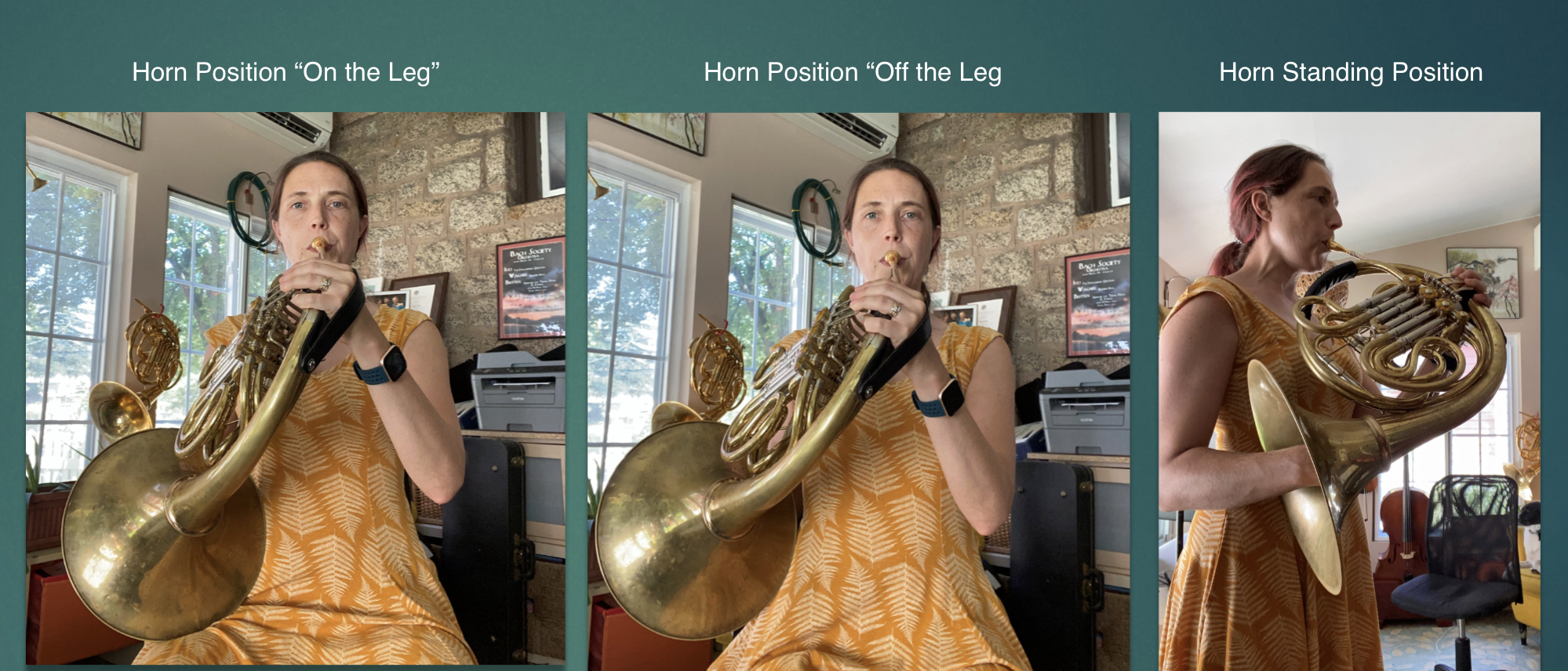
Right Hand Position

Tuck the thumb firmly against the index finger, slightly cupping the hand. Insert the hand into the bell against the far side — far enough to extend the bell throat, but not so far that it muffles the sound.
A compromised hand position can be allowed for a young student of small stature — for example, resting the hand on the inside of the bell if the player is holding the bell up, or resting on the bottom of the bell with the palm curved up if sitting. Adjust to the correct position as soon as feasible.