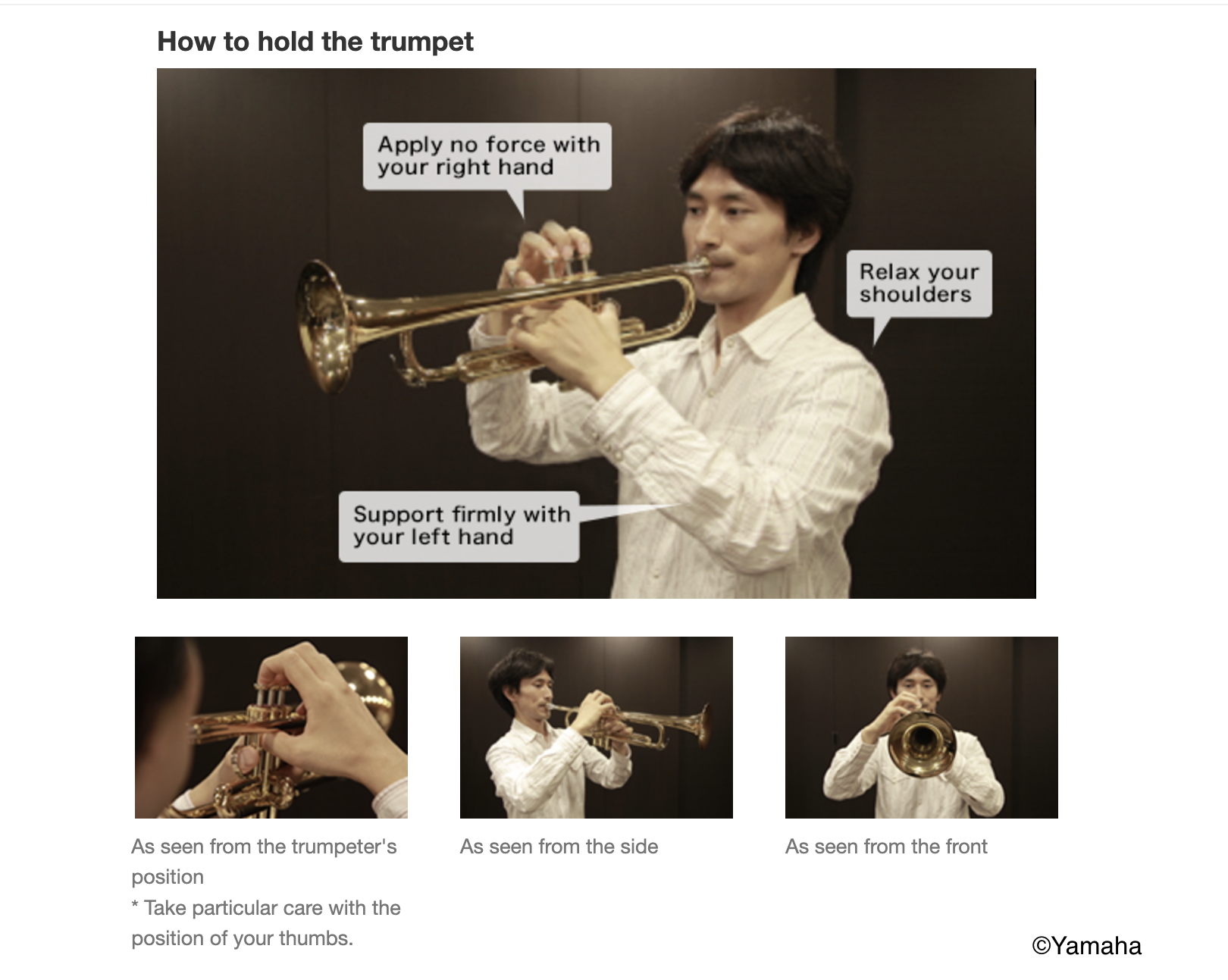
3.3 Trumpet
Essential Question: What is a trumpet?
The trumpet is a brass instrument known for its bright, powerful sound and its versatility across classical, jazz, pop, and marching band music. Its body is a long, narrow, cylindrical brass tube coiled into a compact shape.
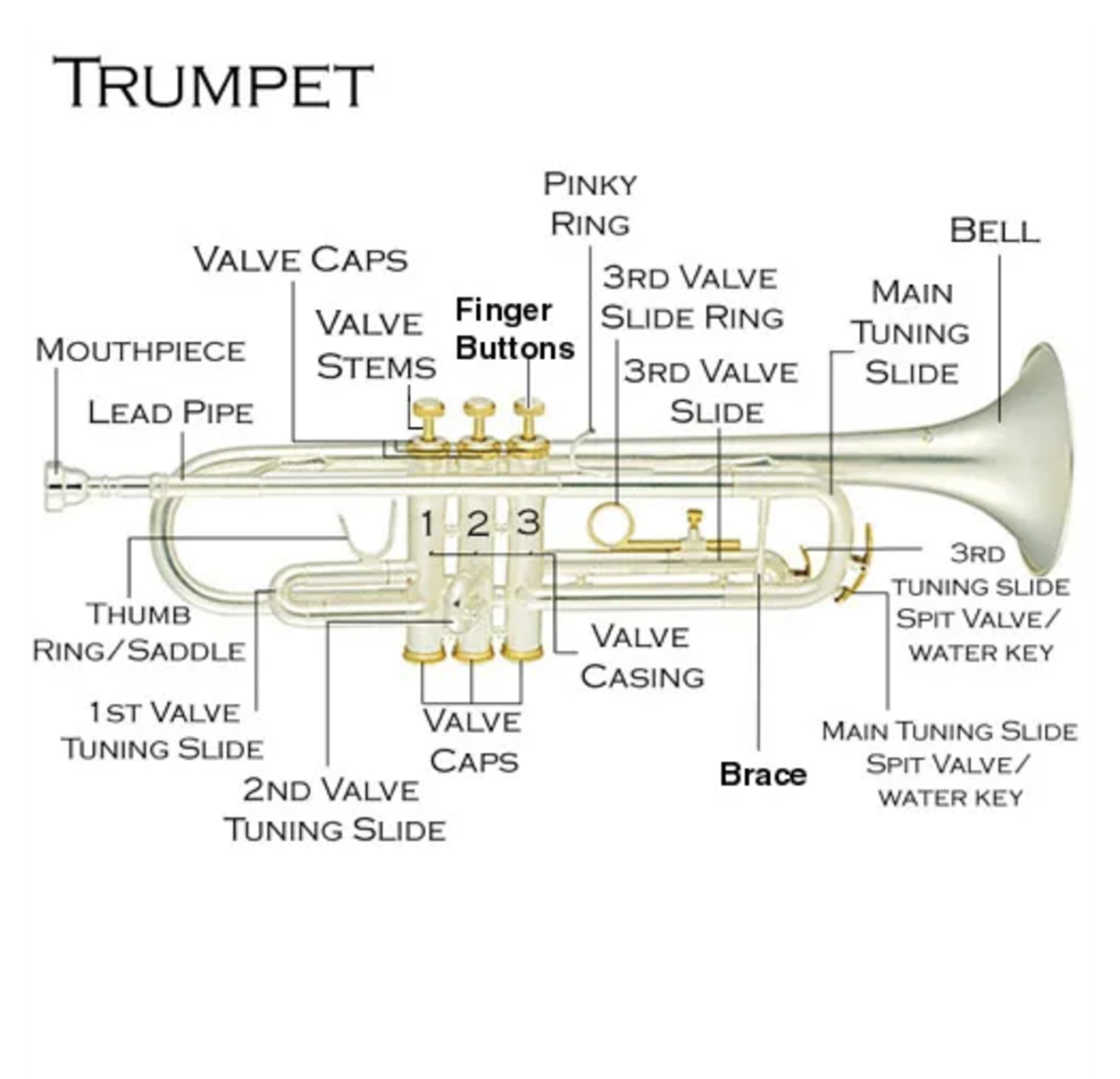
Physical Features
Five main components shape the trumpet's sound and playability.
Mouthpiece
A small, detachable cup where the player buzzes their lips to produce sound. Mouthpieces come in a range of sizes to suit different playing styles and preferences.
Leadpipe
The tube that carries air from the mouthpiece into the main body of the trumpet.
Valves
Three piston valves that lengthen or shorten the tubing to change pitch. Advanced trumpets may add extra tuning slides or rotary valves for specialized use.
Bell
The flared end that projects and amplifies the sound, giving the trumpet its characteristic brilliance and resonance.
Slides
Adjustable tubing used to fine-tune pitch. Players often move the first and third valve slides mid-performance for precise intonation.
How the Trumpet Makes Sound
Sound begins when the player buzzes their lips into the mouthpiece, sending vibrations through the tubing. The combination of valve choices and the player's embouchure — the shape and tension of the lips — determines which note sounds.
Types of Trumpets
- B♭ Trumpet The most common trumpet, and the standard for orchestras, bands, and solo work.
- C Trumpet Favored in orchestras for its slightly brighter tone.
- Piccolo Trumpet Smaller and higher-pitched, often used for baroque and high-register playing.
- E♭/D Trumpet Used for classical works that call for agility and a bright sound.
- Flugelhorn Closely related to the trumpet, but with a softer, mellower tone.
Trumpet Mouthpiece Position
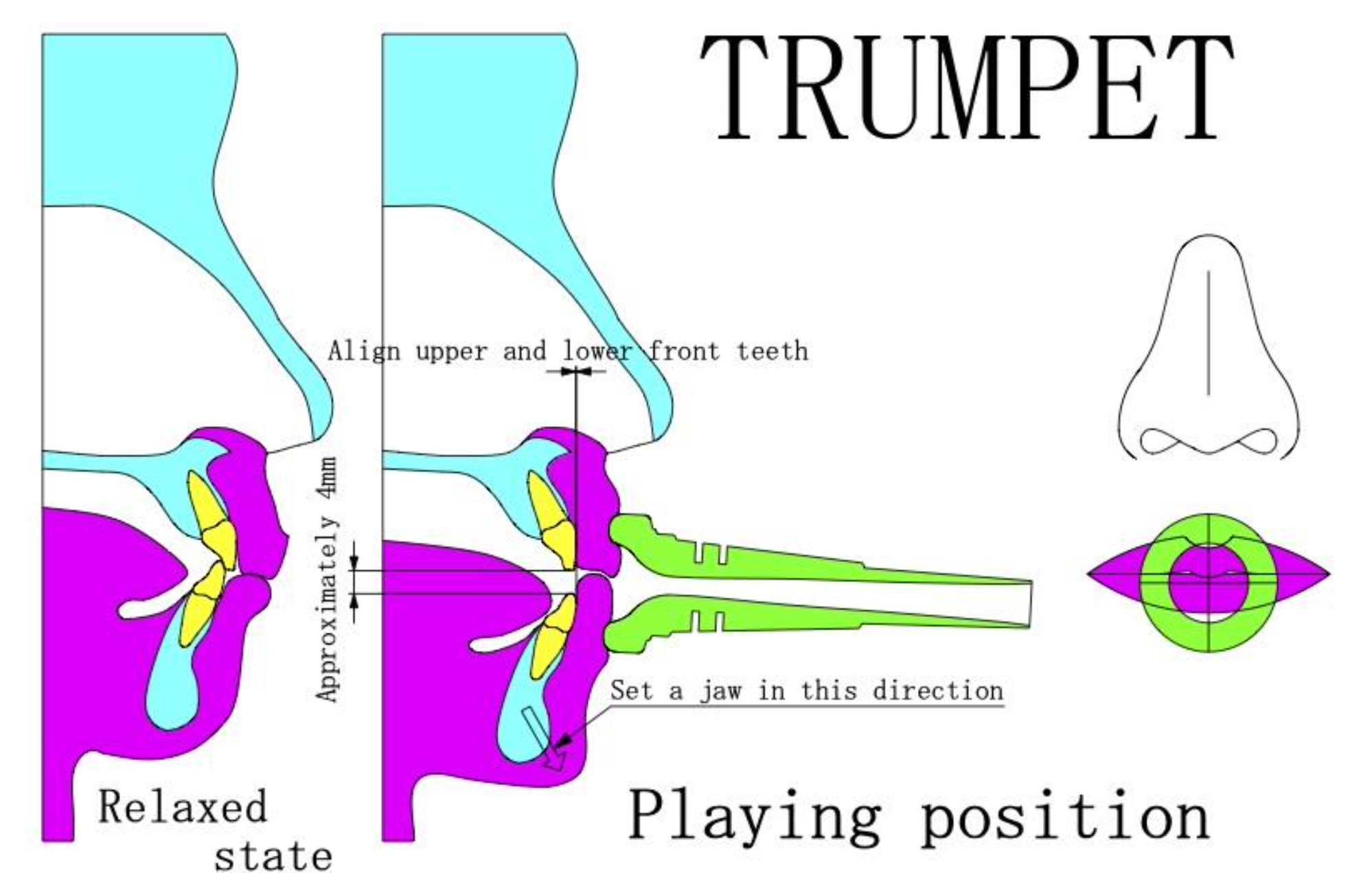
- Place the mouthpiece 50% on the top lip and 50% on the bottom lip.
- Push the jaw slightly forward so the teeth line up on top of each other.
- Open the teeth lightly.
- Form a "brass face" to create the embouchure, with a small opening in the center of the lips (the aperture).
- Blow air through the aperture to start the buzz.