3.6 Tuba and Euphonium
Essential Question: What is a tuba? What is a Euphonium?
The tuba and euphonium are brass instruments that share similar characteristics but serve distinct roles within the brass family. Both are known for their rich, resonant tones and are often used to provide harmonic and melodic depth in ensembles. The tuba is the largest and lowest-pitched brass instrument; the euphonium is slightly smaller, with a higher range and a mellower sound.
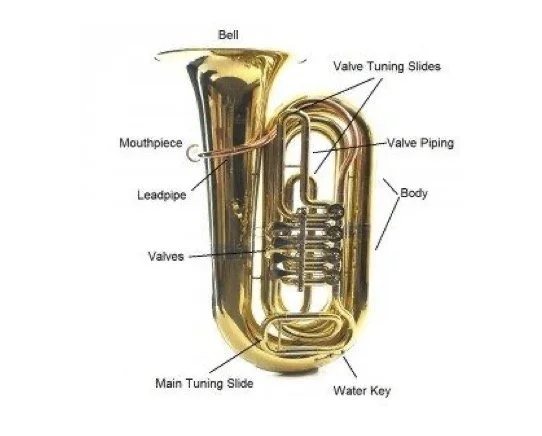
Tuba
Physical Features
Mouthpiece
A large, cup-shaped mouthpiece designed for creating deep, resonant tones. Available in a range of sizes to suit different players and musical styles.
Valves
Three to six piston or rotary valves. Pressing them routes air through different lengths of tubing to change the pitch.
Tubing
Long, coiled tubing measuring 12–18 feet when fully extended. Length varies depending on the tuba's size and key.
Bell
A wide, flared bell that projects the tuba's powerful low-frequency sound. Bell size affects the depth and resonance of the tone.
Body Design
Available in several styles, including the upright concert tuba and the front-facing marching sousaphone.
Types of Tubas
- B♭ Tuba The most common tuba for beginners and concert bands. Standard in Europe and especially in British brass bands.
- C Tuba Preferred in orchestras for its slightly higher pitch and agility.
- E♭/F Tuba Smaller, used in solo and chamber settings. E♭ is common in Europe and British brass bands.
- Sousaphone Designed for marching bands, with a forward-facing bell that projects sound out toward the audience.
Euphonium
Physical Features
Mouthpiece
Smaller and more conical than a tuba mouthpiece, which gives the euphonium its warm, lyrical sound.
Valves
Typically three or four piston valves. The fourth valve extends the range and improves intonation in the lower register.
Tubing
Coiled tubing, shorter and narrower than the tuba's — roughly 9 feet uncoiled.
Bell
A slightly smaller bell than the tuba, angled upward or forward, producing a focused, singing tone.
Body Design
Usually upright, with a compact shape that makes the euphonium easy to handle.
Types of Euphoniums
- Compensating Euphonium Features additional tubing for improved intonation in the lower range.
- Non-Compensating Euphonium Lighter and simpler in design, commonly used by beginners.
How They Make Sound
Both instruments produce sound when the player buzzes their lips into the mouthpiece, sending vibrations through the tubing. Pitch is controlled by a combination of valve choices, tubing length, and embouchure adjustments.
Historical Context
The tuba was invented in the early 19th century as a replacement for the ophicleide and quickly became the foundation of the modern brass section — its deep, resonant voice serving as the harmonic anchor in ensembles. The euphonium was developed in the mid-19th century, evolving from the serpent and the keyed bugle; its name means "sweet-sounding" in Greek, a fitting description of its warm, lyrical tone.
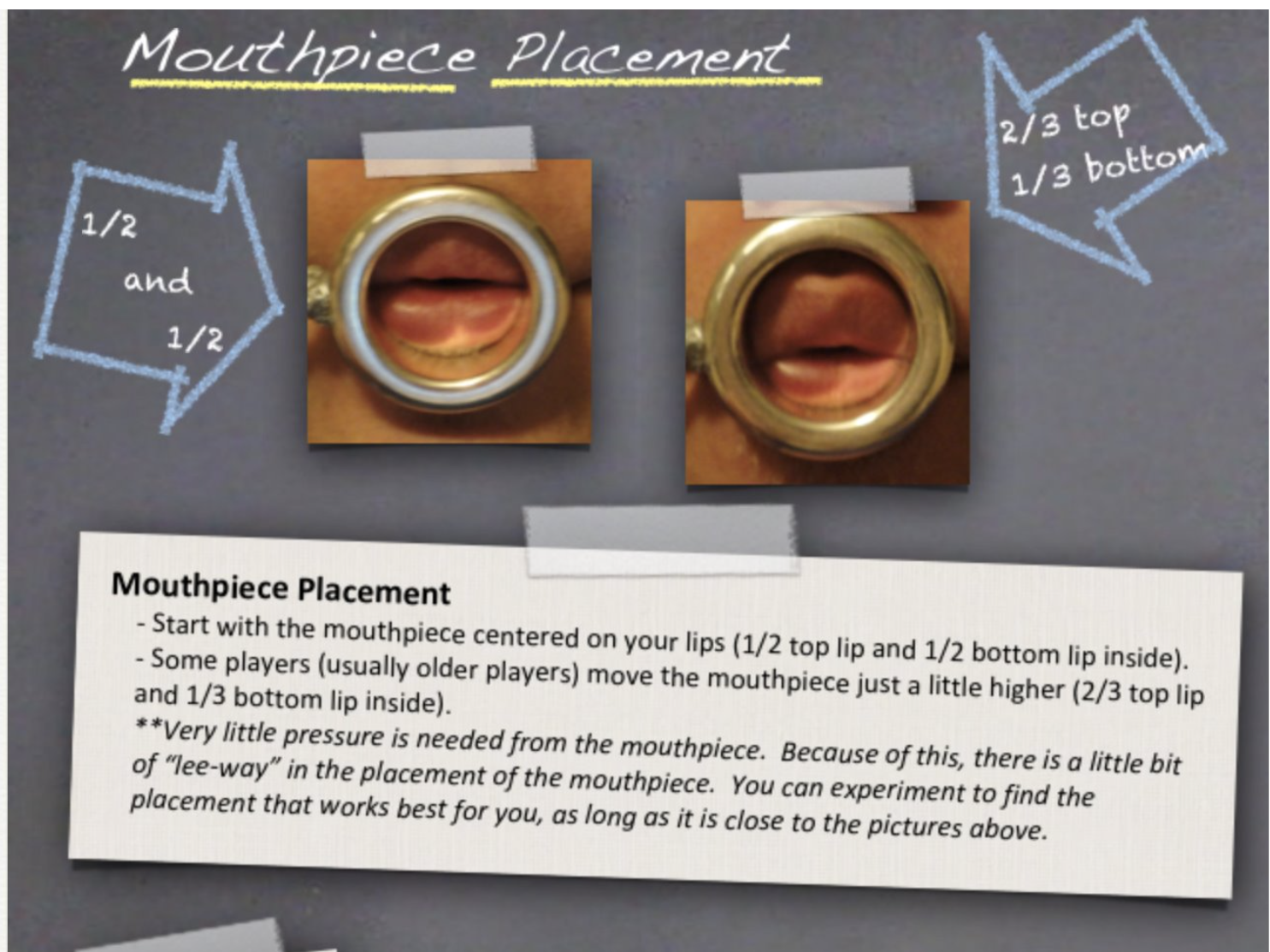
Tuba/Euphonium Mouthpiece Placement
- Place the mouthpiece about two-thirds on the top lip and one-third on the bottom lip, or half and half. The larger size allows flexibility in placement.
- Push the jaw slightly forward so the teeth line up on top of each other.
- Open the teeth lightly.
- Form a "brass face" to set the jaw and create the embouchure, with a small opening in the center of the lips (the aperture).
- Blow air through the aperture to start the buzz.