6.2 Practice Intonation and Pulse
Essential Question: How can musicians develop stronger intonation and rhythmic pulse through deliberate practice?
Practicing Intonation
- Practice with a friend—practice unisons, octaves, fifths, etc. Use Bach Chorales with three other friends.
- Practice with a drone—especially practice unisons, fourths, fifths, and octaves. Put a drone on for whole passages. Put on drone on for scales.
- Sing/play—alternate between singing and playing the troublesome spot. You don’t have to sing it well, you just have to sing it in tune!
- Listen to someone else play it in tune. Imitate it.
- Play duets
Within a practice passage, avoid adjusting after you’ve landed. Instead, notice what needs to be better (if you landed flat, then think about what you need to do to land it a little higher). Repeat the passage. Was it correct this time? If yes, do it again and again until you’ve done it correctly some number of times IN A ROW. If still incorrect, continue to make adjustments in between attempts (as opposed to fixing the note after you’ve hit it) until you can reliably nail it. Then repeat it.
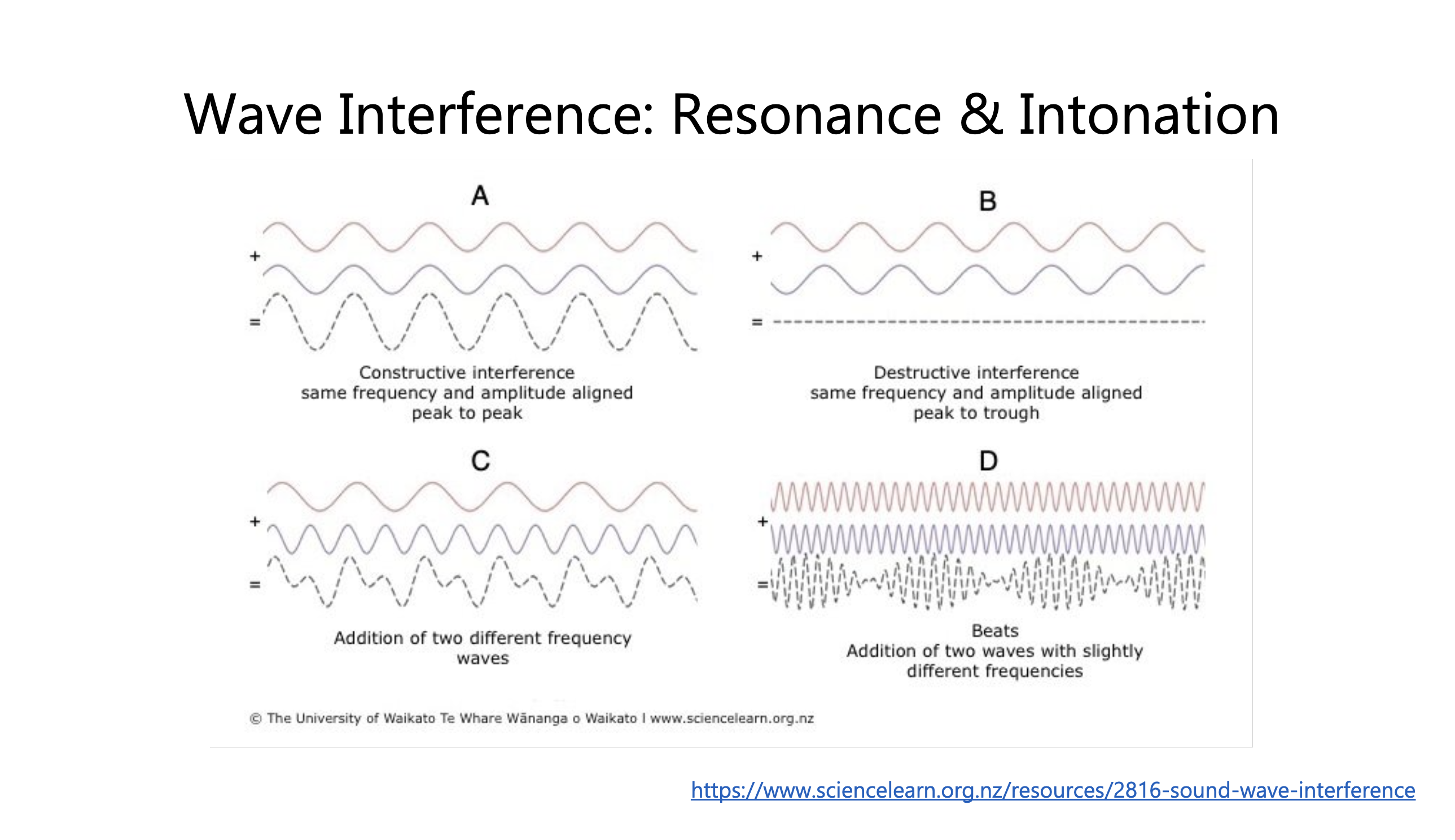
Wave Interference: Resonance and Intonation
This diagram illustrates how sound waves interact when two players perform together, and why intonation matters acoustically. Panel A shows constructive interference: when two waves of the same frequency are perfectly aligned (peak to peak), they reinforce each other, producing a louder, richer sound—this is what happens when two players are perfectly in tune. Panel B shows destructive interference: when the peaks of one wave align with the troughs of another, they cancel each other out, resulting in a weaker or silent sound. Panel C shows what happens when two waves of different frequencies are combined—the resulting wave is complex and irregular. Panel D shows beats: when two waves have slightly different frequencies, they produce a pulsing effect (alternating loud and soft), which is the “wobble” you hear when two notes are almost—but not quite—in tune. Learning to listen for and eliminate these beats is a key skill in practicing intonation.
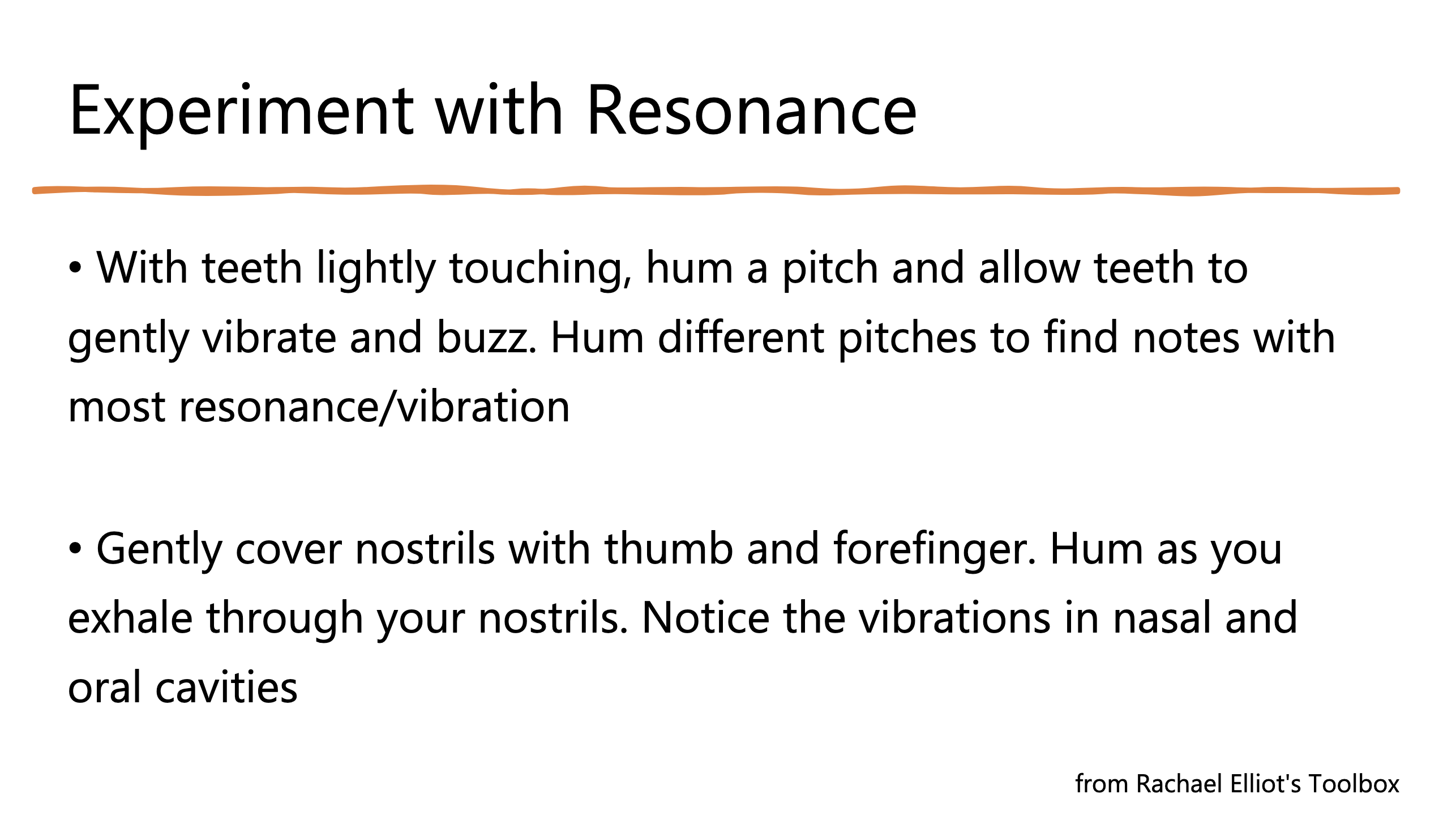
Experiment with Resonance
Try these exercises to feel how resonance works in your own body:
Practicing Pulse
- Tap on a metronome while you sing it. Notice how steady your pulse is.
- Play with a metronome while muting every other beat (you can find apps that do this). Or have the metronome only play the downbeat of each measure. Or have the metronome play the off-beats.
- Record yourself and listen back while tapping along on a metronome. Is it steady?
- Play duets