2.3 Arnold Jacobs
Essential Question: How do Arnold Jacobs's pedagogical principals support proper relationship between air pressure, air flow, and anatomical understanding in playing brass instruments?
Arnold Jacobs (1915–1998) was a renowned American tubist and one of the most influential brass pedagogues of the 20th century. He served as the principal tubist of the Chicago Symphony Orchestra from 1944 to 1988, where he played for over four decades and became celebrated for his exceptional musicianship and tone.
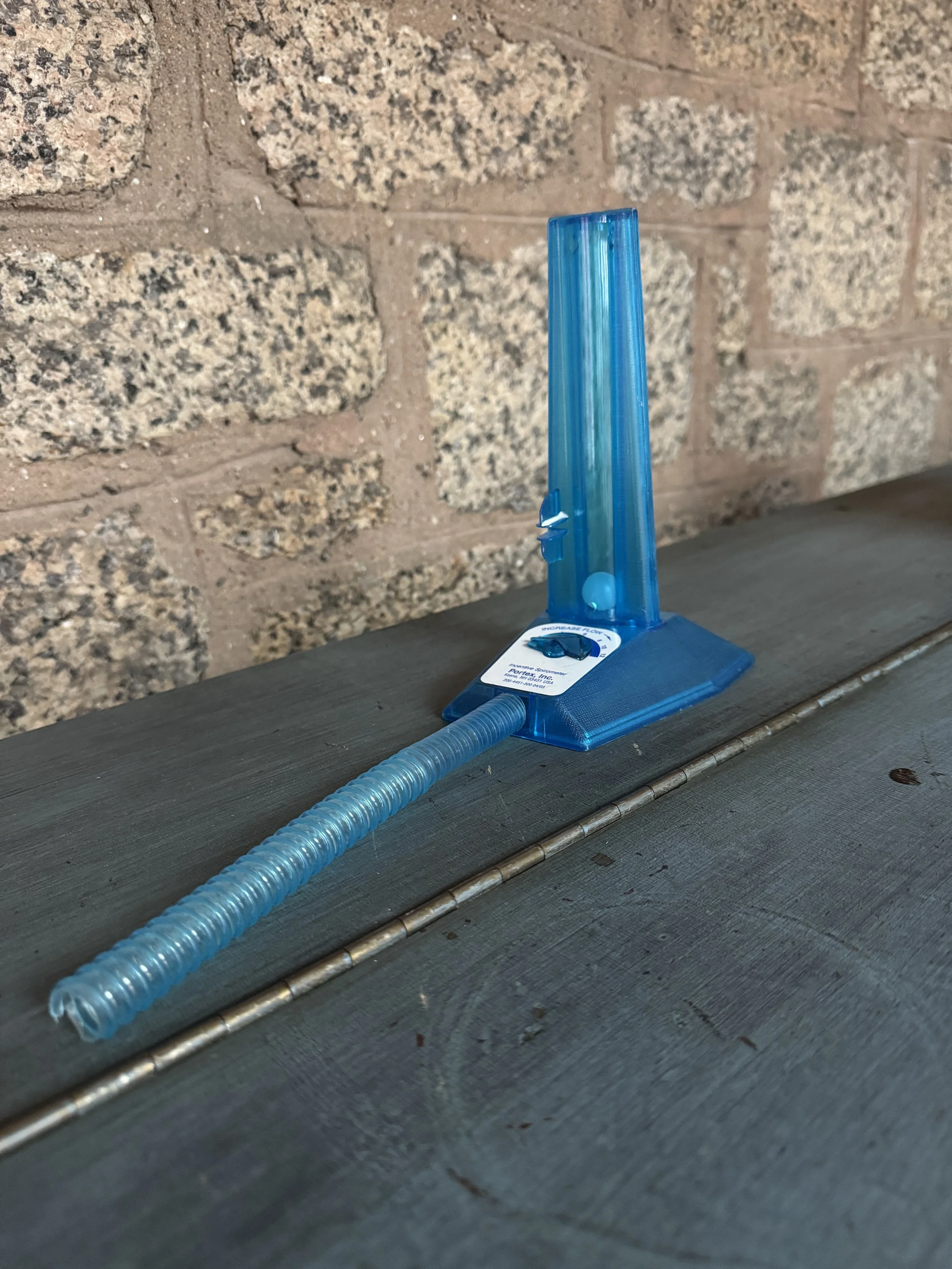
As a pedagogue, Jacobs was highly regarded for his innovative approach to breathing and brass playing. He emphasized the importance of efficient airflow, body awareness, and mental focus in producing a beautiful sound. His teachings on breathing technique and the psychology of performance revolutionized brass pedagogy and influenced countless musicians, not only tubists but players of all brass instruments. Jacobs created and used a number of breathing apparatuses to measure and improve breathing capacity and efficiency. A few are shown here, including breathing bags and incentive spirometers.
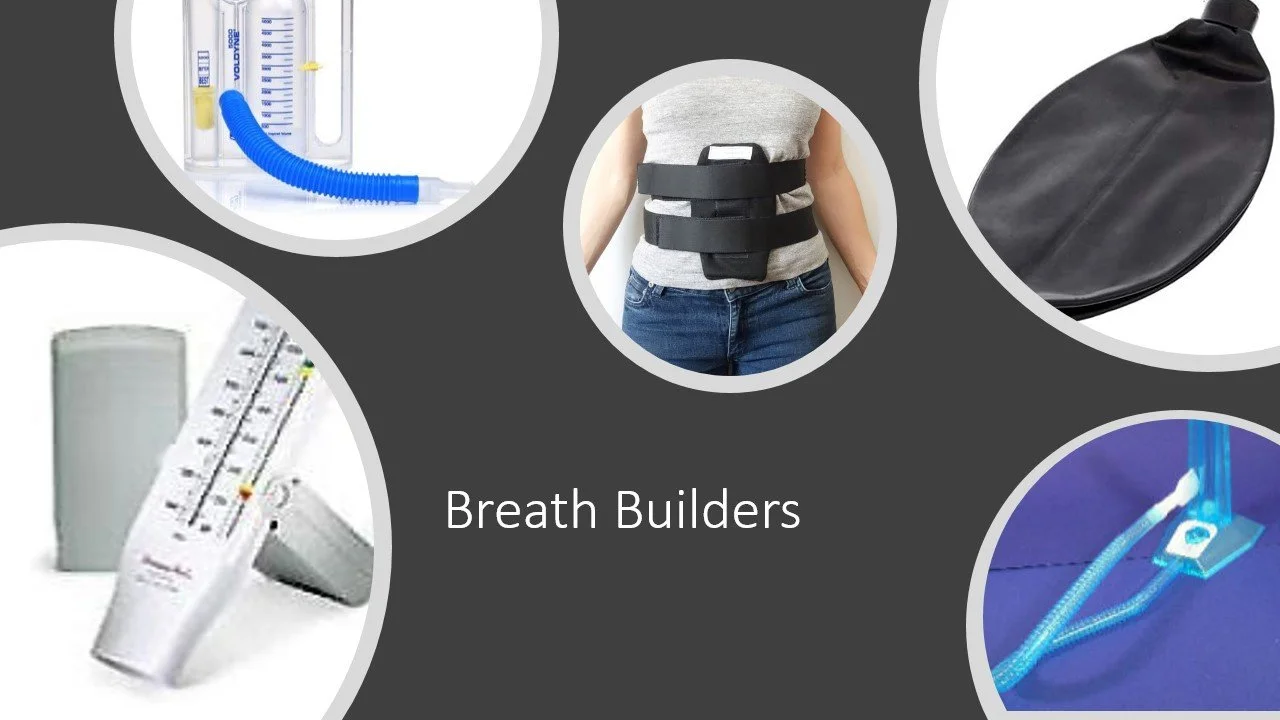
Jacobs taught extensively throughout his career, mentoring generations of students and professionals who have carried his teachings forward. The following is an excerpt of Jacob's teachings, collected from his former students.
Advice from Arnold Jacobs
Please read the excerpt below from Also Sprach Arnold Jacobs about Arnold Jacobs' Pedagogy. Read Section 4.1-4.5. Additional pages are provided as optional reading.
Measuring Inhale and Building Useful Capacity
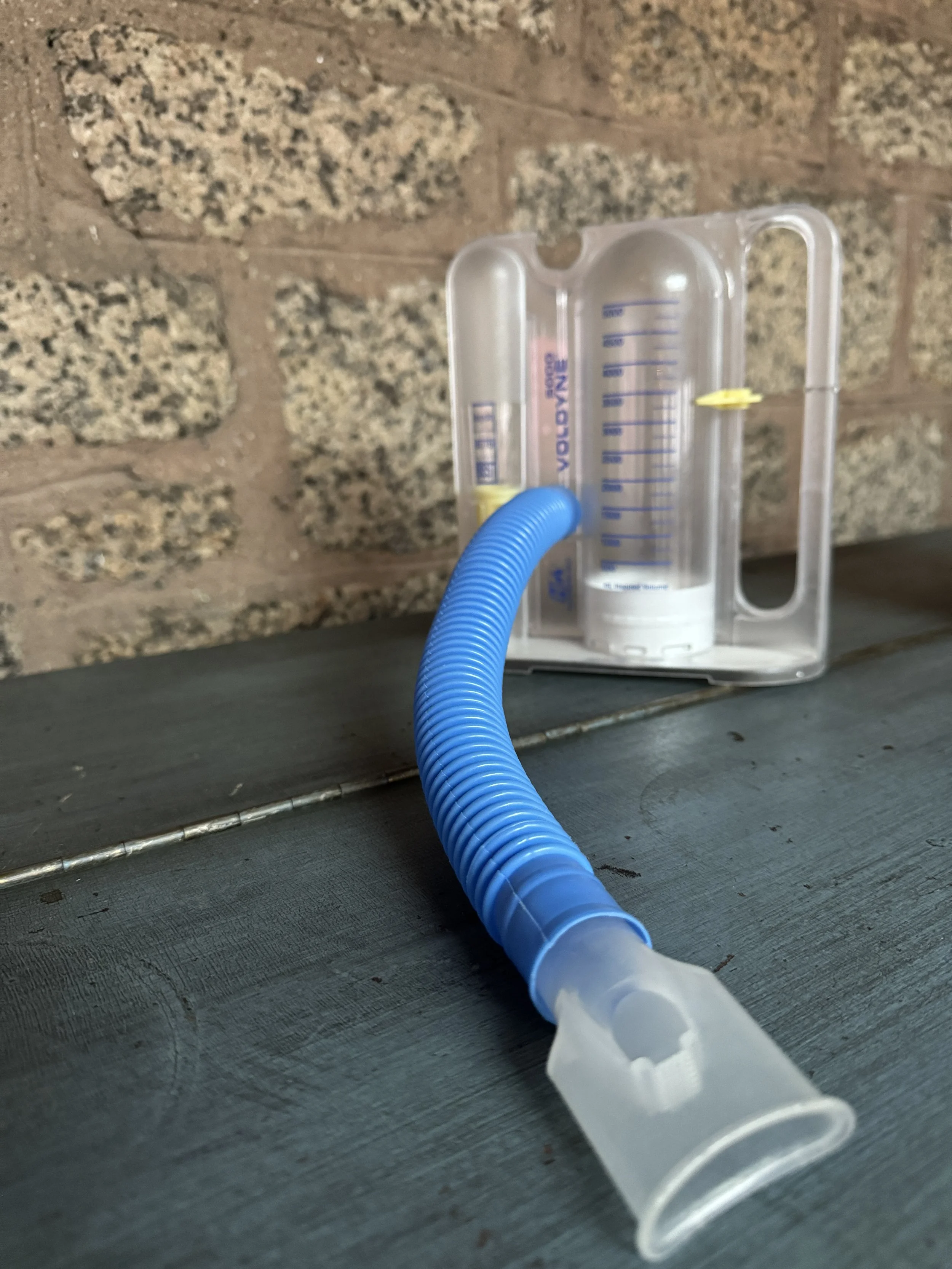
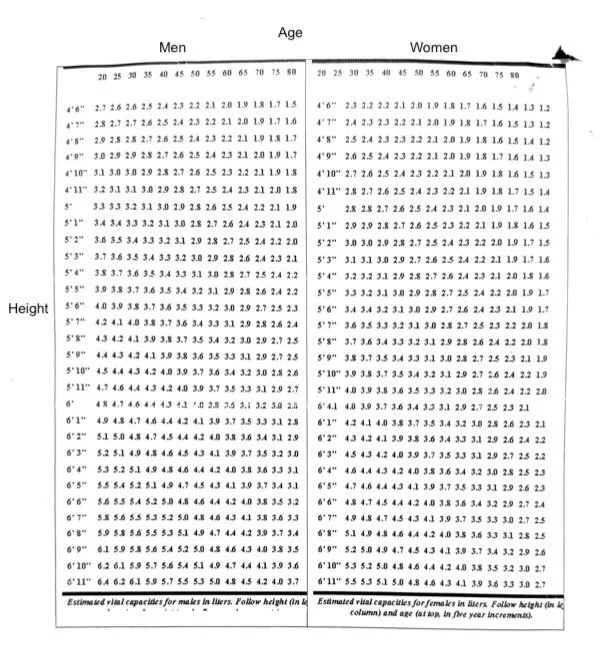
Use the graph to note the student's vital capacity and then use the Voldyne Spirometer to measure their inhale. Is there a difference? Sometimes, well-trained wind players will actually have a usable capacity above the expected vital capacity. If that's the case, great! More commonly, the student will not be inhaling to their vital capacity. You can use the breathing devices and exercises to help them build breath efficiency and useful capacity.
Tools to Build Better Breathing
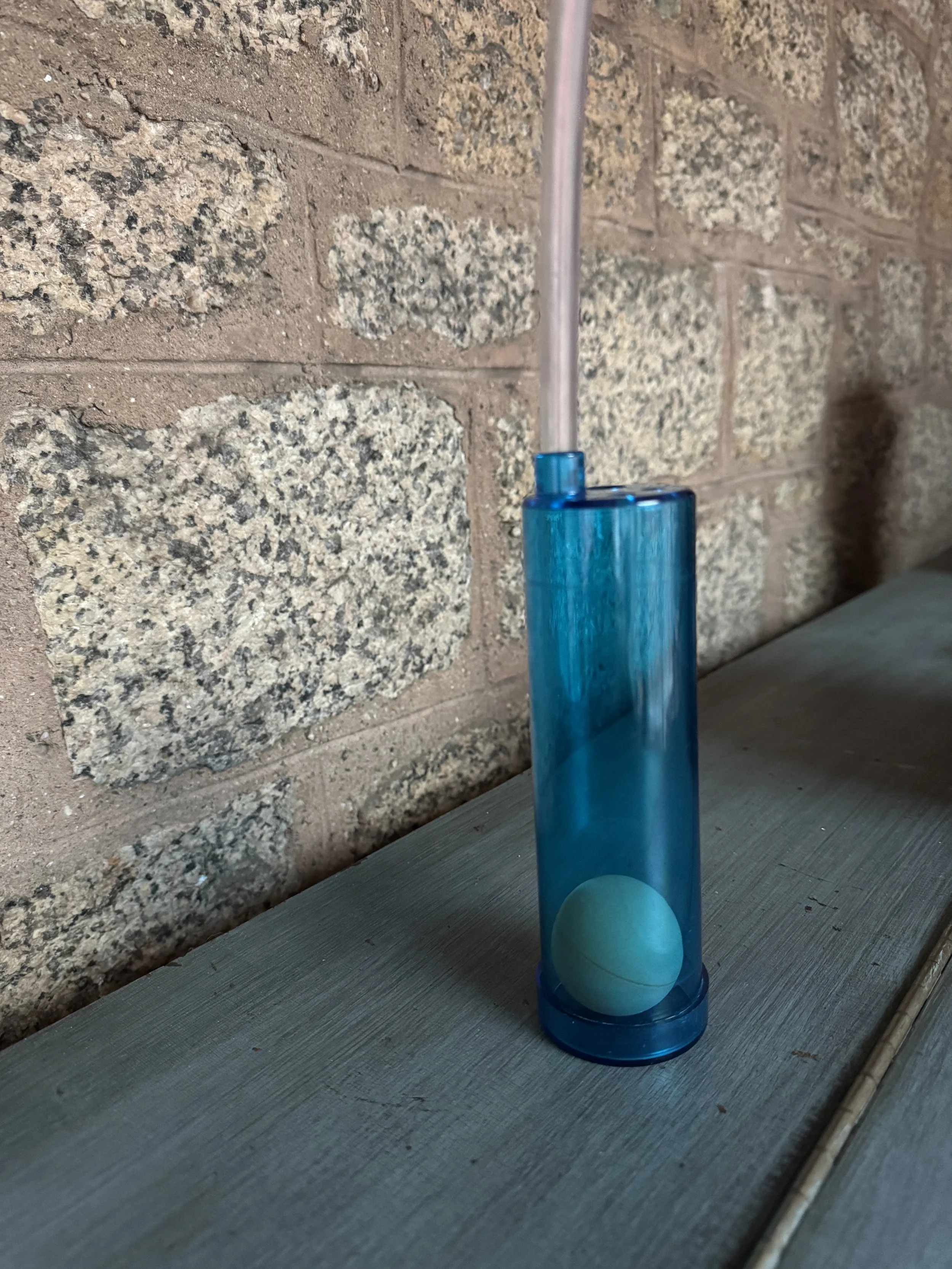
Use the Breath Builder to feel the sensation of inhale and exhale. Try to keep the ping pong ball up the whole time!
Use the Incentive Spirometer to see how much you are inhaling. Vary the resistance to build up better efficiency.
Turn the Incentive Spirometer upside down to work the exhale. You can put a mouthpiece into the tube and buzz (use a very low resistance for buzzing). Can you keep the ball at or near the top, even when you add articulation?
The PDF below gives more details on how to use the devices for the best results
Breath Builder & Incentive Spirometer
Learning Check
2 points possible (ungraded)
Longy students should write their breathing metaphors in their toolbox.
1. According to the Bernoulli principle, which is true?
2. According to Arnold Jacobs, which of these is NOT true for brass players?
Arnold Jacobs' statement, "Focus on the psychology, not the mechanics of breathing," emphasizes the importance of fostering natural, efficient breathing habits through mental imagery rather than overanalyzing physical processes. For wind playing, this approach reduces tension and promotes ease, allowing for better tone and control.
To teach healthy breathing to a high school student, use metaphors that make the concept relatable and engaging:
- Blowing bubbles in a bubble wand: Encourage soft, steady airflow for quiet playing, focusing on control and consistency.
- Blowing up a balloon: Illustrate the need for full, deep breaths and steady pressure to expand sound.
- Imagining a river of air: Highlight the continuous, smooth motion of airflow, connecting breath to musical phrasing.
These metaphors help students visualize effective breathing and develop habits that support musical expression.