2.2 Breathing Anatomy
Essential Question: How does an accurate understanding of breathing anatomy improve playing and teaching for wind players?
How did you do?
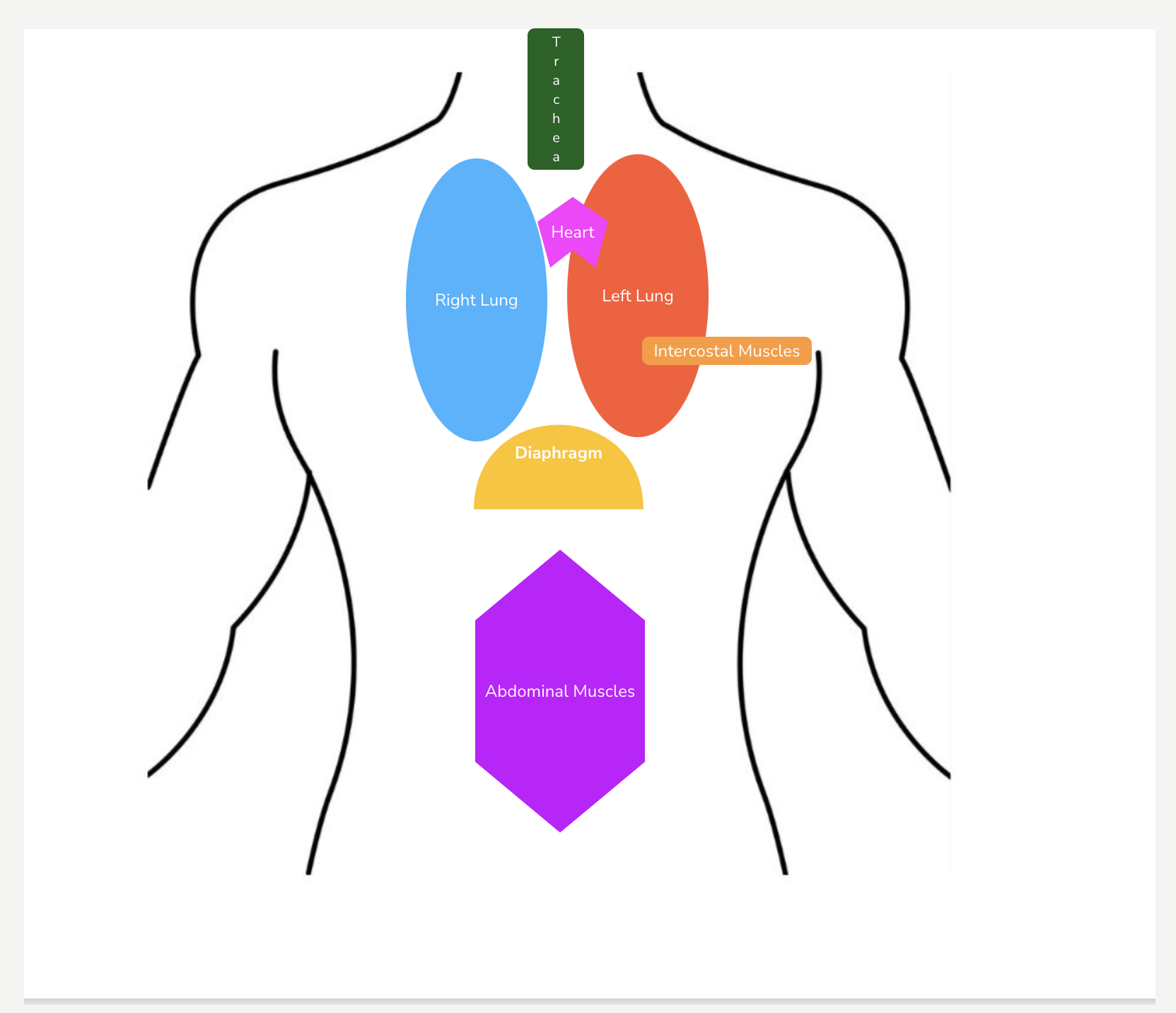
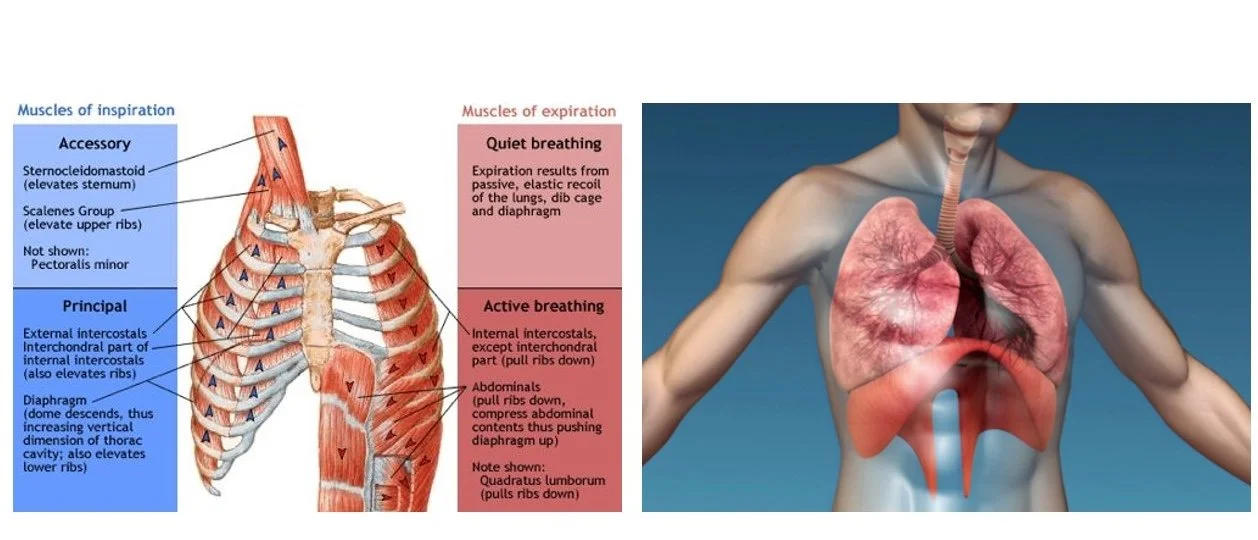
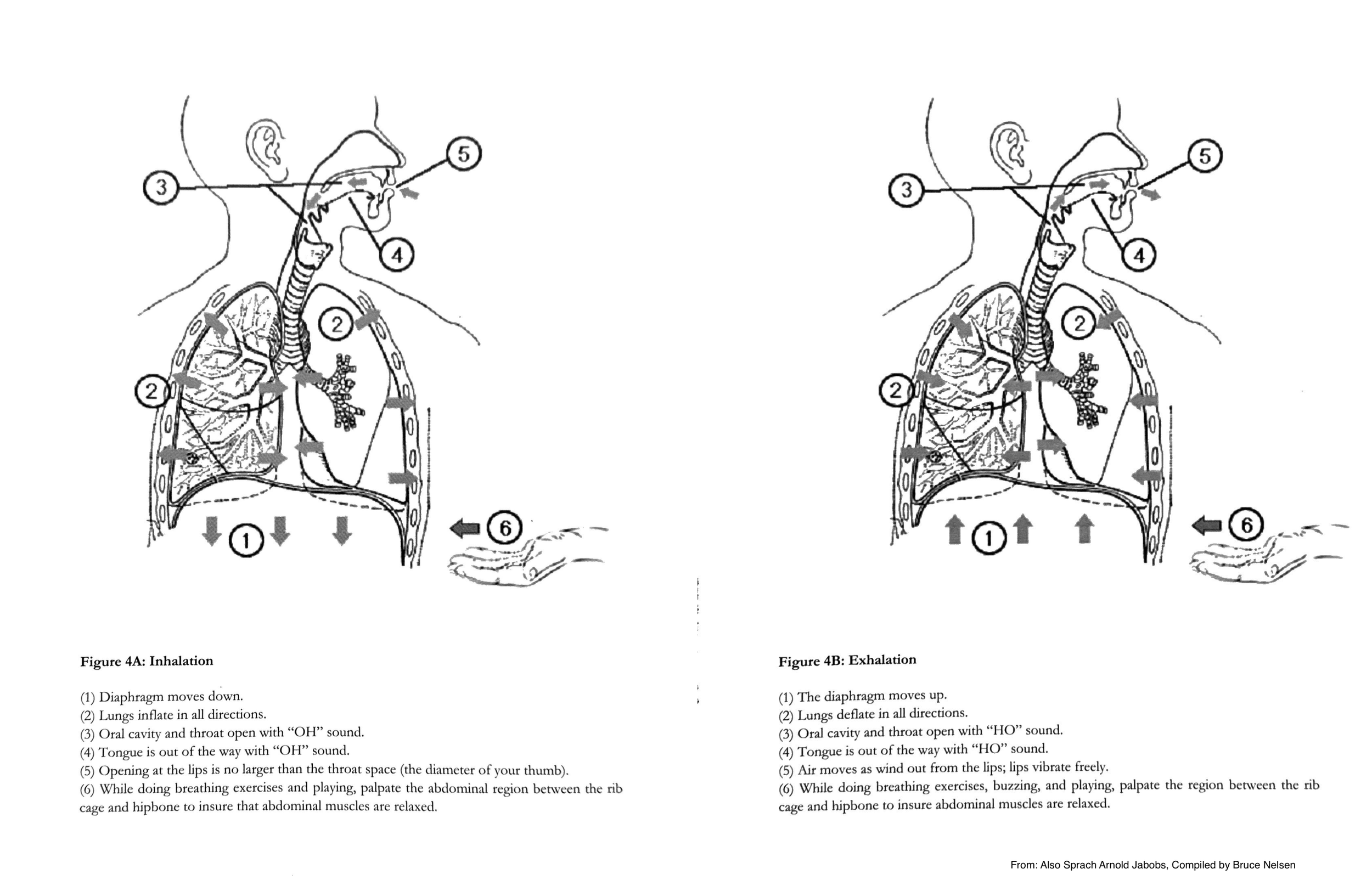
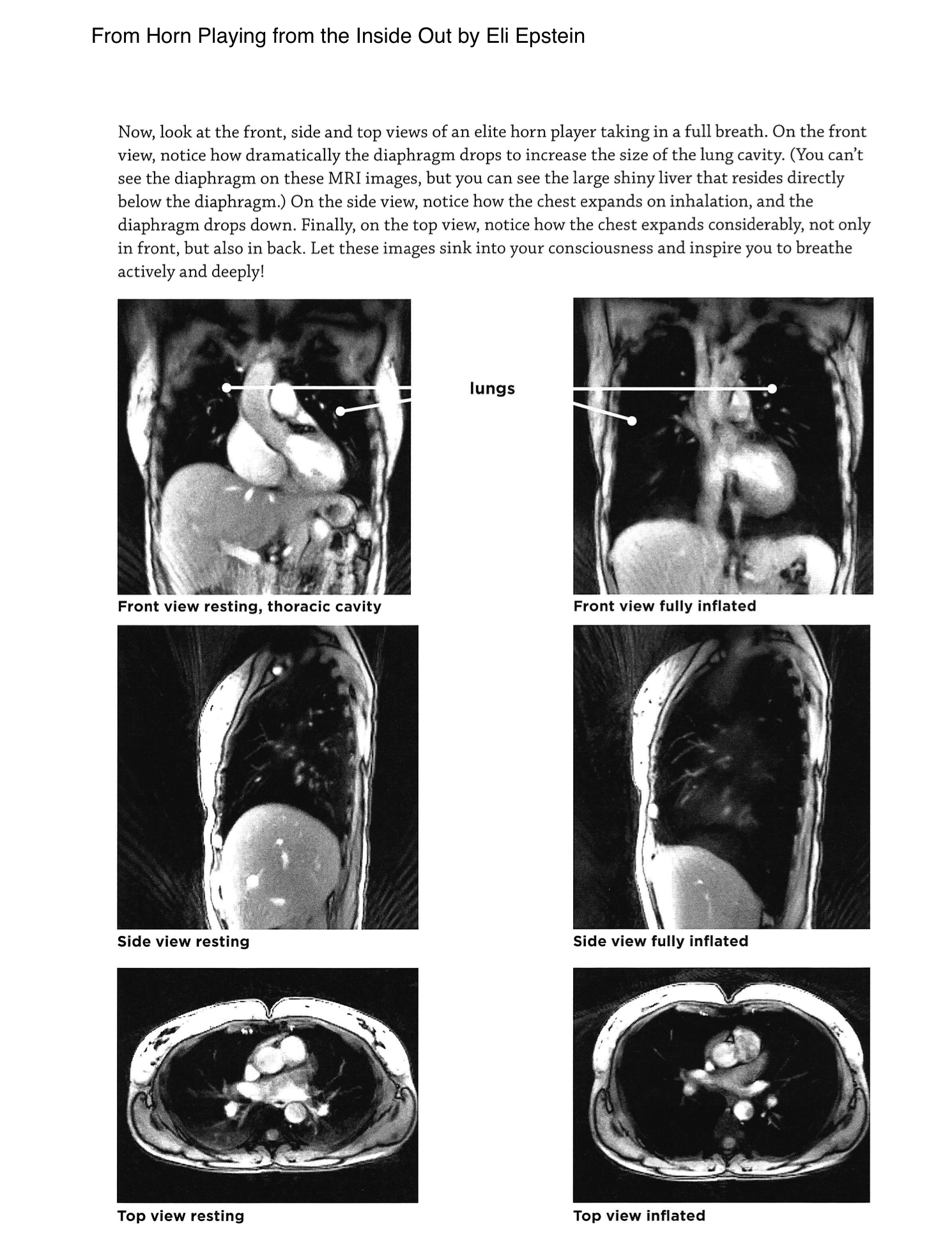
The lungs are significantly higher in the chest than many people believe. At rest, the diaphragm is dome shaped and creates a floor at the base of the rib cage, attaching to the sternum. It separates the thoracic cavity from the abdominal cavity. Many people mistakenly think that the diaghragm lies low in the belly area. This mis-mapping can lead to inefficient and even harmful breathing habits for wind players. The intercostal muscles are the muscles between the ribs, allowing for expansion of the rib cage. Explore the diagrams and videos below to better understand the placement and role of these organs, paying special attention to the lungs and diaphragm.
Belly Breathing?
In your instrumental lessons, did you ever have a teacher say "breathe into your belly", "breathe down low", "push your diaphragm down to inhale"? Now that you have a clearer sense of your anatomy, does that make sense?
News Flash: The belly CANNOT fill with air!
Only the lungs can fill with air and they are located in the top 1/3 of your torso. The organs in the lower abdomen will be displaced by the expanding lungs and descending diaphragm, which will cause an expansion in the "belly", but there is no air going there.
Correctly mapping the anatomy of breathing is critical to healthy, efficient breaths.
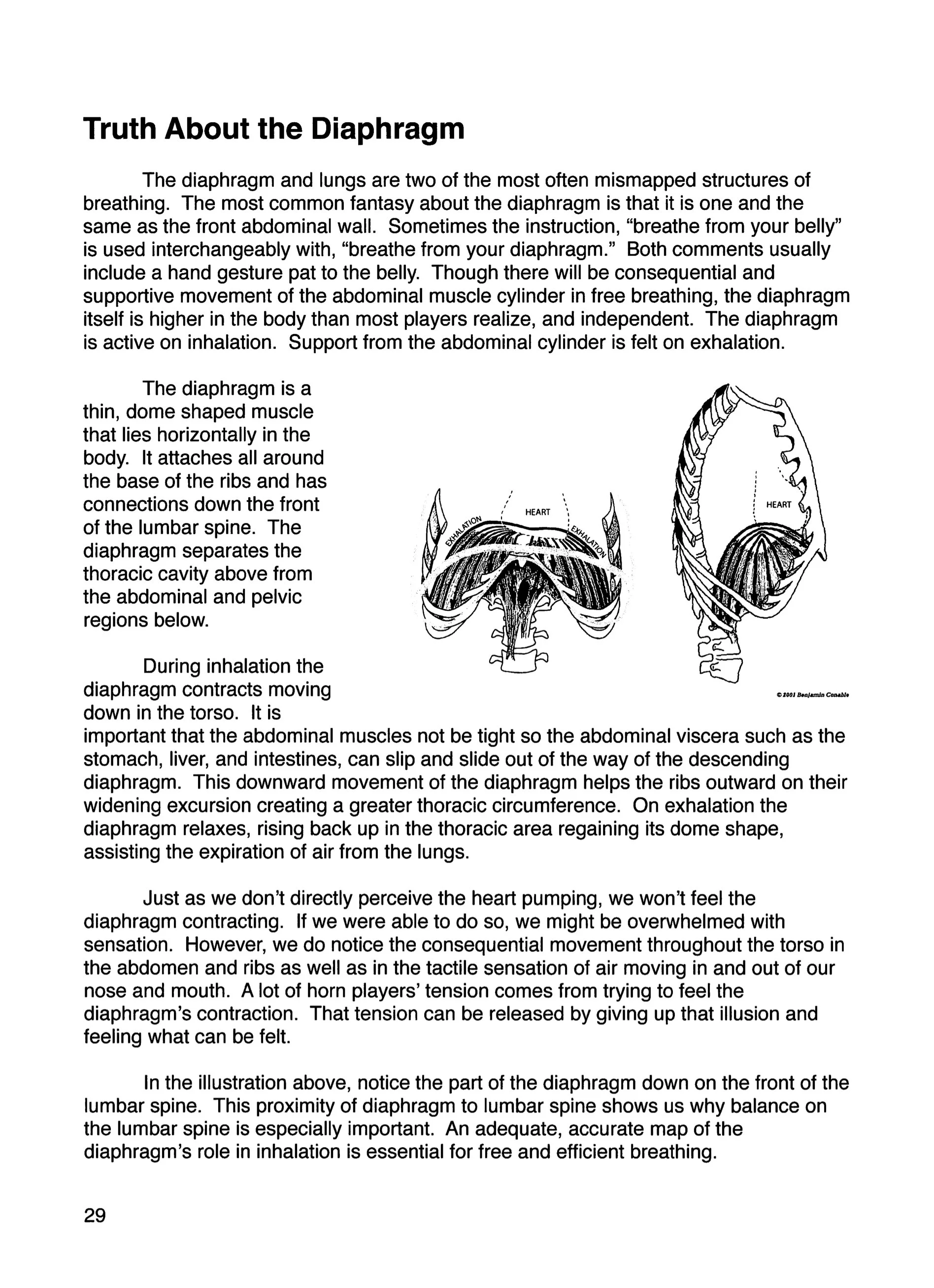
Read the following excerpt from The Breathing Book by David Nesmith for a better understanding of your lungs and diaphragm.
An MRI of a Horn Player
Go to 7:35 in this video of Berlin Philharmonic hornist Sarah Willis in an MRI machine.
Reflect and Explain
Longy students are recommended to write their answer into their toolbox
Example response: My lungs go all the way up to my collarbones and down to the base of my sternum. If I focus too much on expanding my belly, I may not be efficiently filling my lungs. The lungs are 3-D so you should feel expansion on the side and back of the body just as much as on the front. While abdominal support is essential for a supported exhale, overly tight abdominal muscles can inhibit quality inhales. The abdominal muscles have to be relaxed enough to allow the organs like the liver and stomach to slip out of way of the expanding lungs.