3.1 Brass Instrument Family
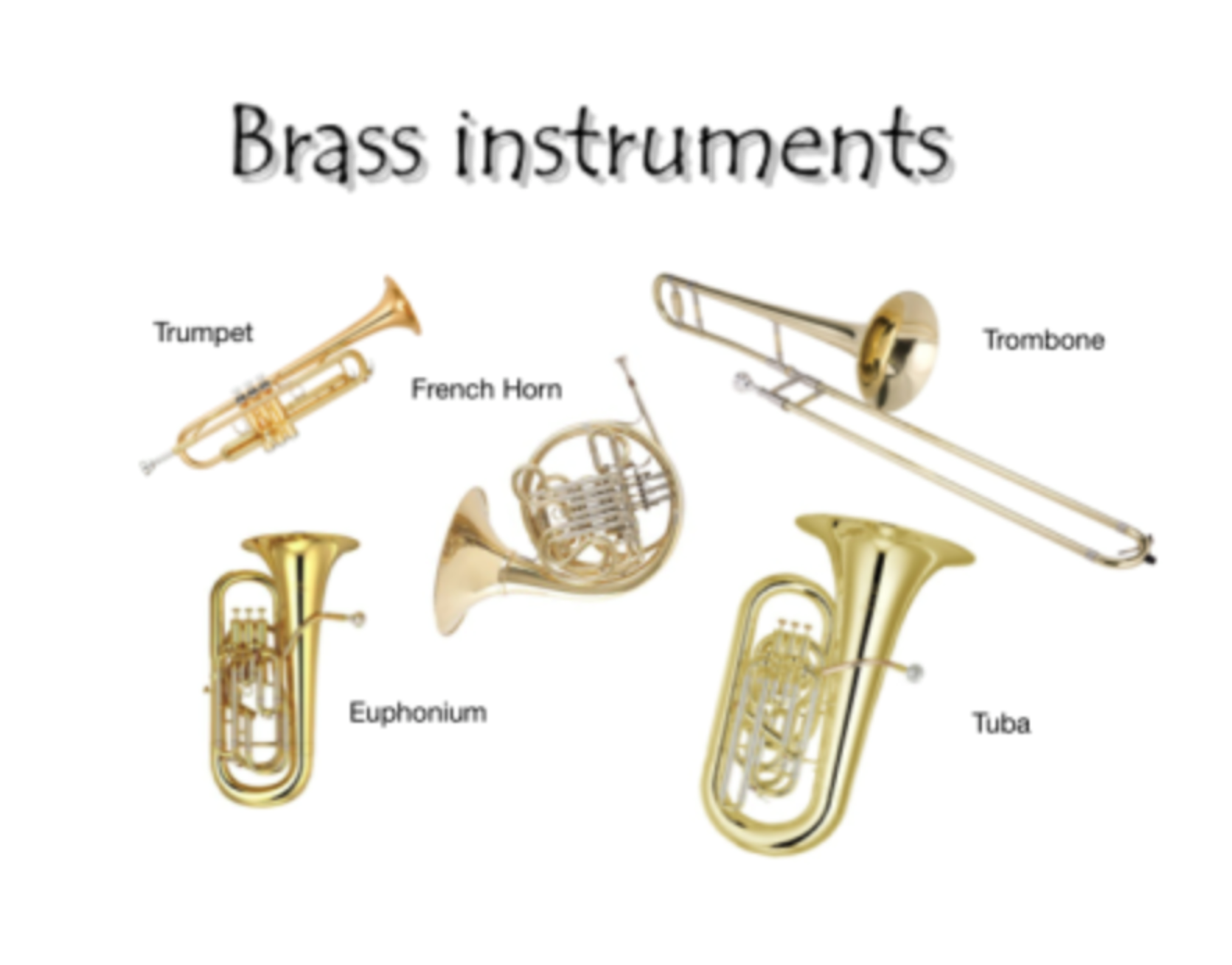
The brass family of instruments is a vibrant group known for its powerful, resonant sound and versatility in various musical settings. These instruments are made of brass or other metals and produce sound through the buzzing of the player's lips into a cup-shaped mouthpiece. Players alter airspeed and lip tension to create different pitches, while valves or slides allow for additional note combinations. The family includes trumpet, French horn, trombone, euphonium, and tuba.
Common Characteristics
- Made of brass/metal
- Sound produced by buzzing lips into a mouthpiece
- Players adjust lip tension to select desired pitch within the natural harmonic series
- Valves (and trombone slide) allow access to notes from different harmonic series by changing tubing length
- Sound is amplified by the bell
A Quick History Lesson
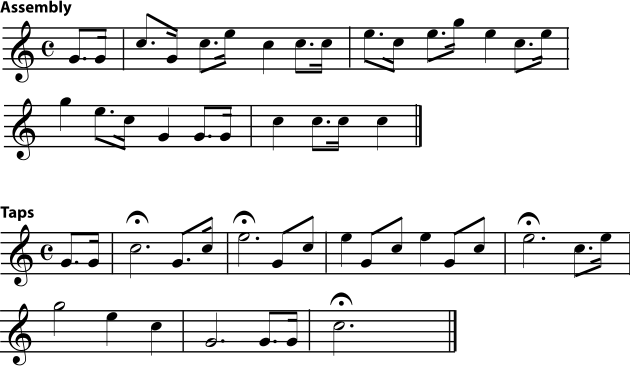
Brass instruments are basically just a tube that amplifies the buzz. Historically, brass instruments didn't even have valves and thus players could only play the notes that could vibrate on that specific length of tube. For every length of tube, there are a series of notes that can resonate. This is called the Harmonic Series. By vibrating the lips at certain speeds, the player can get the instrument to sound one of the harmonics, rather than the fundamental of the given series. Before the invention of valves, the bugle and natural horn were known mostly for their fanfare and hunting-horn calls because those melodies contain only the notes within a single harmonic series.
Modern brass instruments have lots of tubing all coiled up and use valves or slides to direct the air into different lengths of tubing in order to access different harmonic series. By pressing a valve down, the fundamental is lowered. Thanks to these modern instruments, brass players can play all the notes without switching instruments!
The Harmonic Series
The harmonic series is the sequence of pitches, or overtones, that are naturally produced when a vibrating object, such as a string or column of air in a brass instrument, vibrates at different frequencies simultaneously.
Key Characteristics
- Fundamental Frequency: The lowest and strongest pitch produced; it serves as the base note of the series.
- Overtones: Higher pitches that occur above the fundamental, created by dividing the vibrating medium (air column or string) into segments.
- Mathematical Relationship: Each overtone’s frequency is a whole-number multiple of the fundamental frequency (e.g., 2x, 3x, 4x, etc.).
- Pitch Pattern: The overtones follow a specific pattern, starting with the fundamental and ascending in intervals that grow smaller (octave, fifth, fourth, etc.).
- Brass Instrument Application: Brass players use the harmonic series to produce different pitches on the same length of tubing by altering their lip tension and air speed.
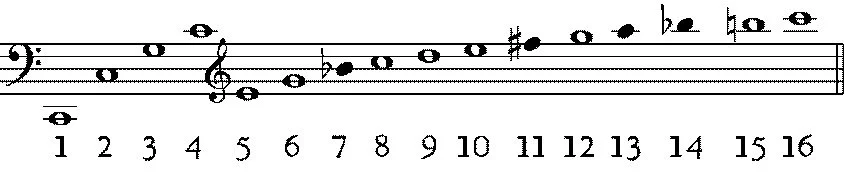
If the fundamental pitch is C, the harmonic series might include: Fundamental: C (1st harmonic) Octave above: C (2nd harmonic) Fifth above: G (3rd harmonic) Fourth above: C (4th harmonic) Major third above: E (5th harmonic) Minor third above: G (6th harmonic), and so on.