1.4 Effortful and Fun Learning
Effective Learning Should Be Effortful
Research in cognitive science consistently shows that the most durable learning happens when students are actively challenged. Struggle is not a sign that teaching has failed—it is a sign that learning is happening. When students have to work to retrieve information, solve problems, or apply skills in new contexts, they build stronger and longer-lasting neural connections than when material comes easily. As a teacher, your job is not to remove difficulty but to design the right kind of difficulty: challenges that stretch students just beyond their current abilities.
And Fun
How do you bring creativity into your lessons from the earliest stages? Learning is effortful, yes, but that does not mean it should not also be fun.
Incorporating Play
Though much of this course is about the nuts and bolts and nitty gritty of teaching wind and brass instruments, I want to remind you from the start of how important it is to keep learning fun. Learning is effortful, yes, but that doesn’t mean it shouldn’t be fun. It doesn’t always need to be fun, but nor should it always feel like a chore. Find that balance with your students and in your own practice. Be flexible and open to what individual students need and respond well to.
Making learning fun means being creative and including “play,” especially with younger students. Below are a few ideas I’ve used as a horn teacher.
Ideas for Making Lessons Fun
- Offer fun, relatable music for students to learn, alongside the war-horses and traditional exercises. For example, write out a Taylor Swift song for a 7th grade Swifty learning the flute.
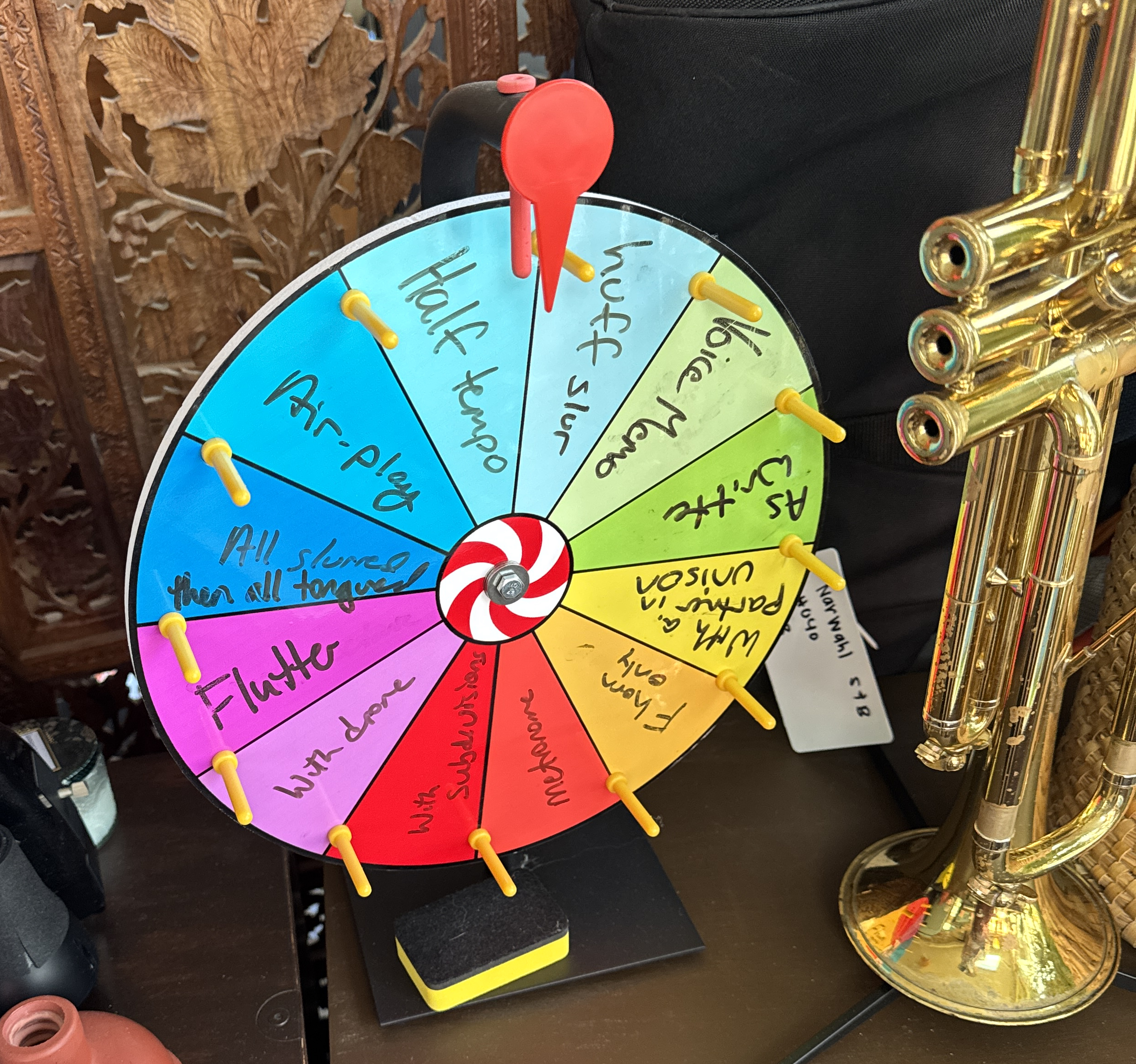
- Use a spinner wheel for practice techniques, for learning scales, or for choosing emotions you want to portray in a piece.
- Have students play while doing a wall-sit to feel what natural support is.

- Hold a piece of paper against a wall using only your airstream—a great visual exercise for steady air support.
- Learn to say the alphabet backwards to help internalize the feeling of downward scales.
- Have students run up and down the stairs to get their heart rate up, and then try to play—a great way to work on playing through nerves.
- Make practice challenges for your students.
- Offer stickers or prizes.
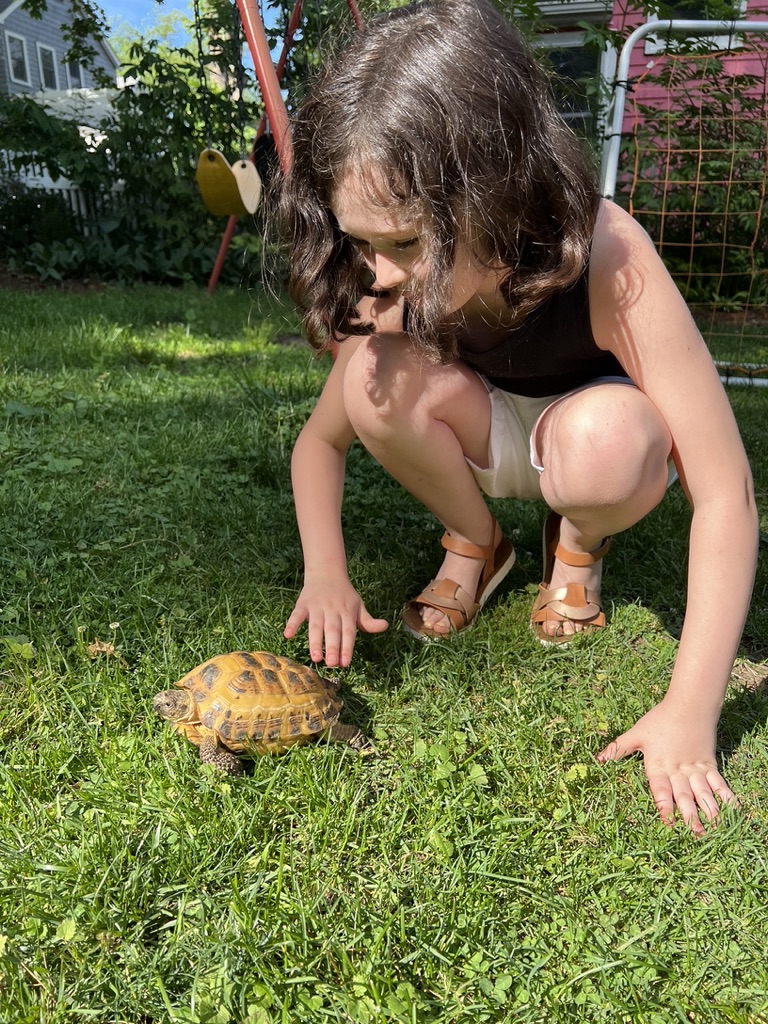
- Take breaks away from the instrument. One of my students worked best in very short sessions, so we would do 10 minutes of structured lesson followed by 5 minutes of time with my tortoise, and then back to the horn for 10 more minutes.
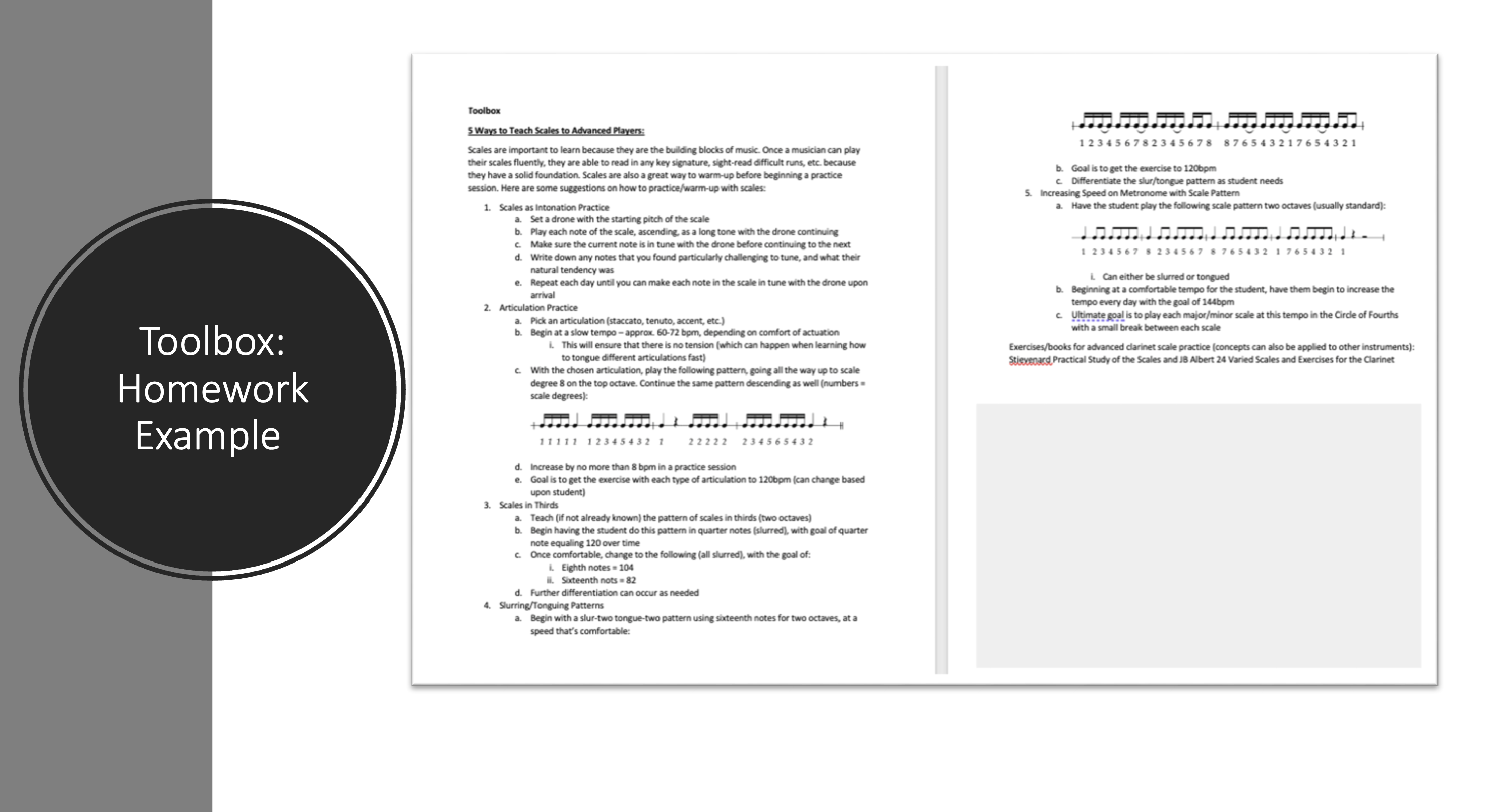
Teaching Toolbox:
Identify 2 ways to teach scales to advanced players and 2 ways to teach scales to beginner students. Consider:
- How should the students practice scales?
- What is the importance of learning scales?
- How can they work on them in a way that promotes recall and understanding?
- How can you make the practice time fun?