1.2 What is Learning?
Your Fundamental Goals as a Teacher
As teachers, we have two fundamental goals: to impart knowledge and to teach for understanding. Beyond simple recall, we want students to develop the ability to transfer the skills they learn to new situations. This distinction—between knowing facts and truly understanding them—shapes everything about how we design our teaching.
What Do You Think?
Before reading further, take a moment to consider these two questions. Jot down your initial thoughts.
Insights from Educational Theory
These seemingly simple questions have been explored deeply in the fields of Instructional Design and Teaching for Understanding. Educational researchers draw a clear line between knowledge—the recall of facts and information—and understanding—the ability to explain, interpret, apply, and transfer what one knows to unfamiliar contexts.
Stages of Learning
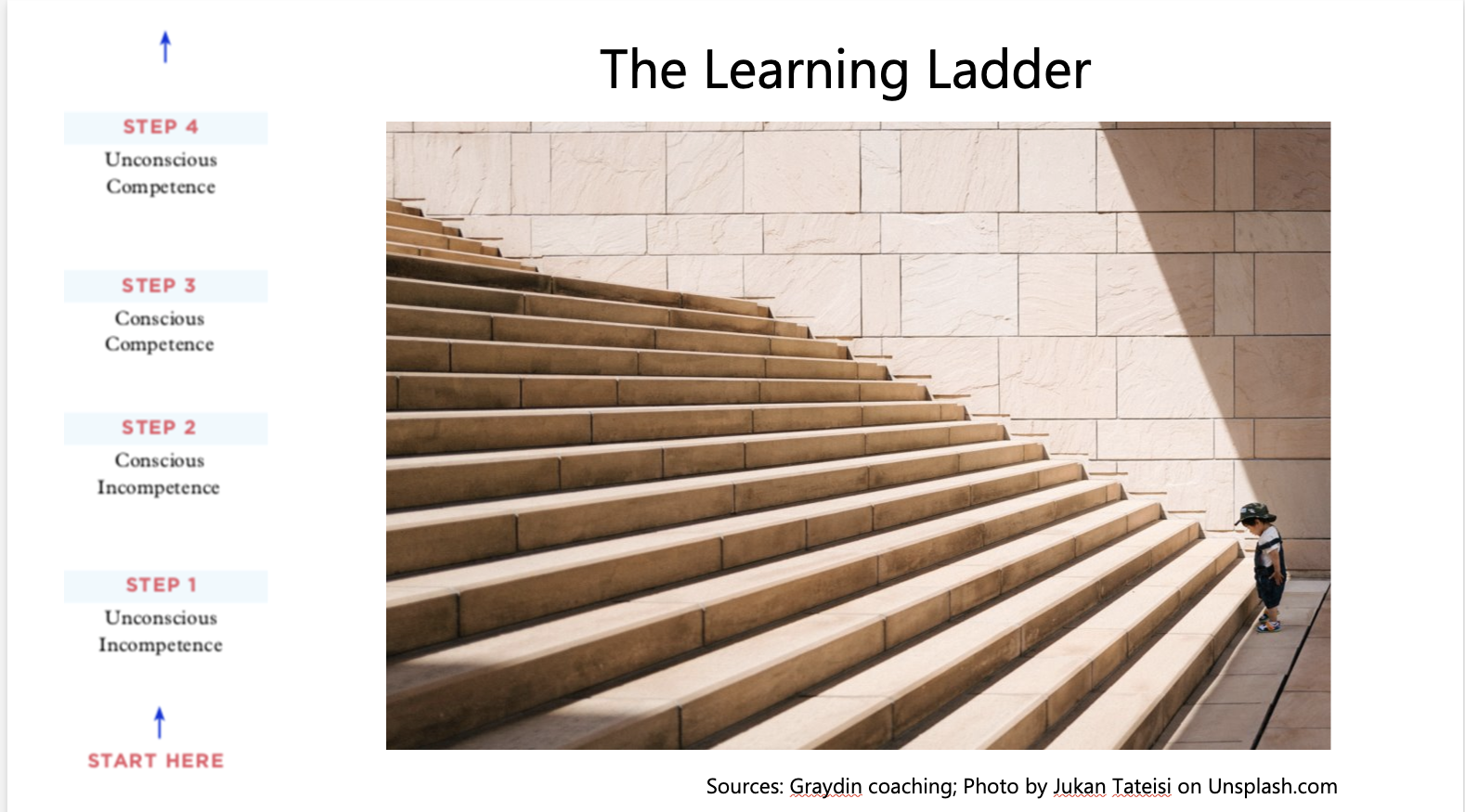
Learning is not a single event but a progression through stages. One widely used model is the Competence Hierarchy, originally developed by Noel Burch. It describes four stages that every learner moves through when acquiring a new skill:
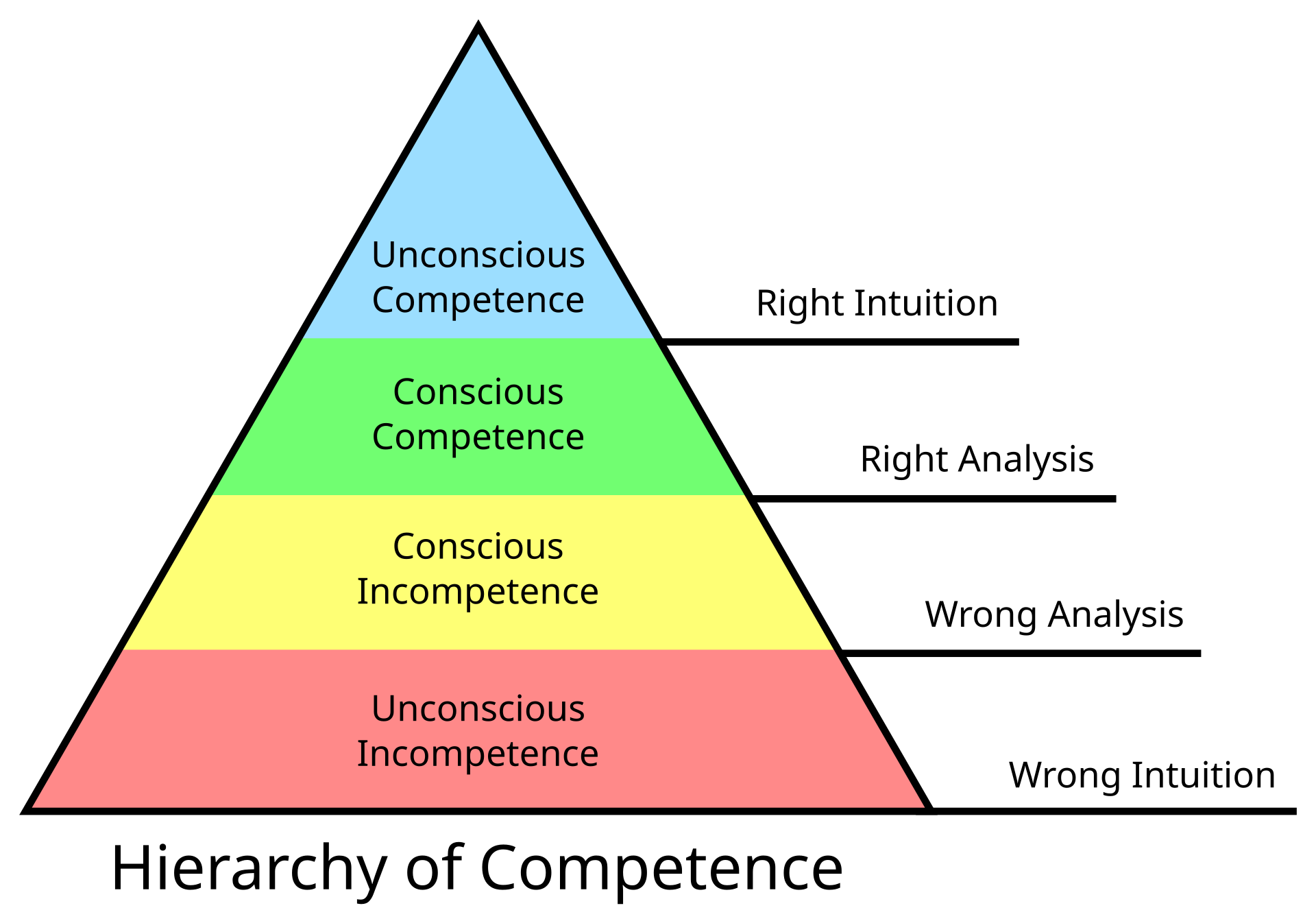
- Unconscious incompetence: The learner does not know what they do not know. They are unaware of the skill or that they lack it.
- Conscious incompetence: The learner becomes aware of the skill and recognizes that they have not yet developed it. This stage can be frustrating, but the awareness is essential for growth.
- Conscious competence: The learner can perform the skill, but it requires deliberate focus and concentration. It has not yet become automatic.
- Unconscious competence: The skill has become second nature. The learner can perform it reliably without thinking about it, freeing their attention for higher-level musical tasks.
Example: A Horn Student Learning Embouchure
Consider a beginning horn student learning to form a stable, efficient embouchure:
- Unconscious incompetence: The student picks up the horn for the first time and buzzes into the mouthpiece however feels natural. They are not aware that their lip position, jaw alignment, or corner firmness matter—they do not yet know what a good embouchure is.
- Conscious incompetence: After a few lessons, the teacher points out that the student is pinching their lips together and pulling their chin back. The student can now hear and feel the difference between a thin, strained tone and a more resonant one, but they cannot yet produce the better sound consistently.
- Conscious competence: With practice, the student learns to set their corners firmly, drop their jaw, and direct the air downward into the mouthpiece. They can produce a full, centered tone—but only when they are actively thinking about each element. If they get distracted by reading notes or counting rhythms, the old habits creep back.
- Unconscious competence: After years of careful practice, the embouchure feels natural. The student no longer thinks about corner firmness or jaw position—their body has internalized it. Their attention is now free to focus on phrasing, dynamics, and musicality.
Understanding By Design
One of the most influential frameworks for teaching toward deep understanding is Understanding by Design (UbD), developed by Grant Wiggins and Jay McTighe. The core idea is simple but powerful: start with the end in mind.
- Establish learning objectives. The learning goals are not the content itself—the learning goals are what you want students to be able to do with the content.
- Develop assessments around those learning objectives.
- Design activities to explicitly and transparently teach toward these objectives.
The 3 Stages of Backward Design
Wiggins and McTighe outline three stages of backward design:
- Identify desired results: What is the outcome you hope to achieve? What are your goals? What enduring understandings are desired? What content should students know, and what should they be able to do?
- Determine acceptable evidence: How will you determine if students are meeting these goals? What will you accept as evidence of student understanding and proficiency? Think like an assessor up front, before designing units and lessons.
- Plan learning experiences and instruction: What knowledge and skills will students need? What materials, resources, and activities will best support this learning? What needs to be taught, and how?
Why Teach Music?
Studies show that the area of the brain used for music and language processing are closely related. Read this article on the relationship between music and language. To prepare for our class discussion on this article, please write a short paragraph in your toolbox summarizing the relationship between music and language.